Short answer
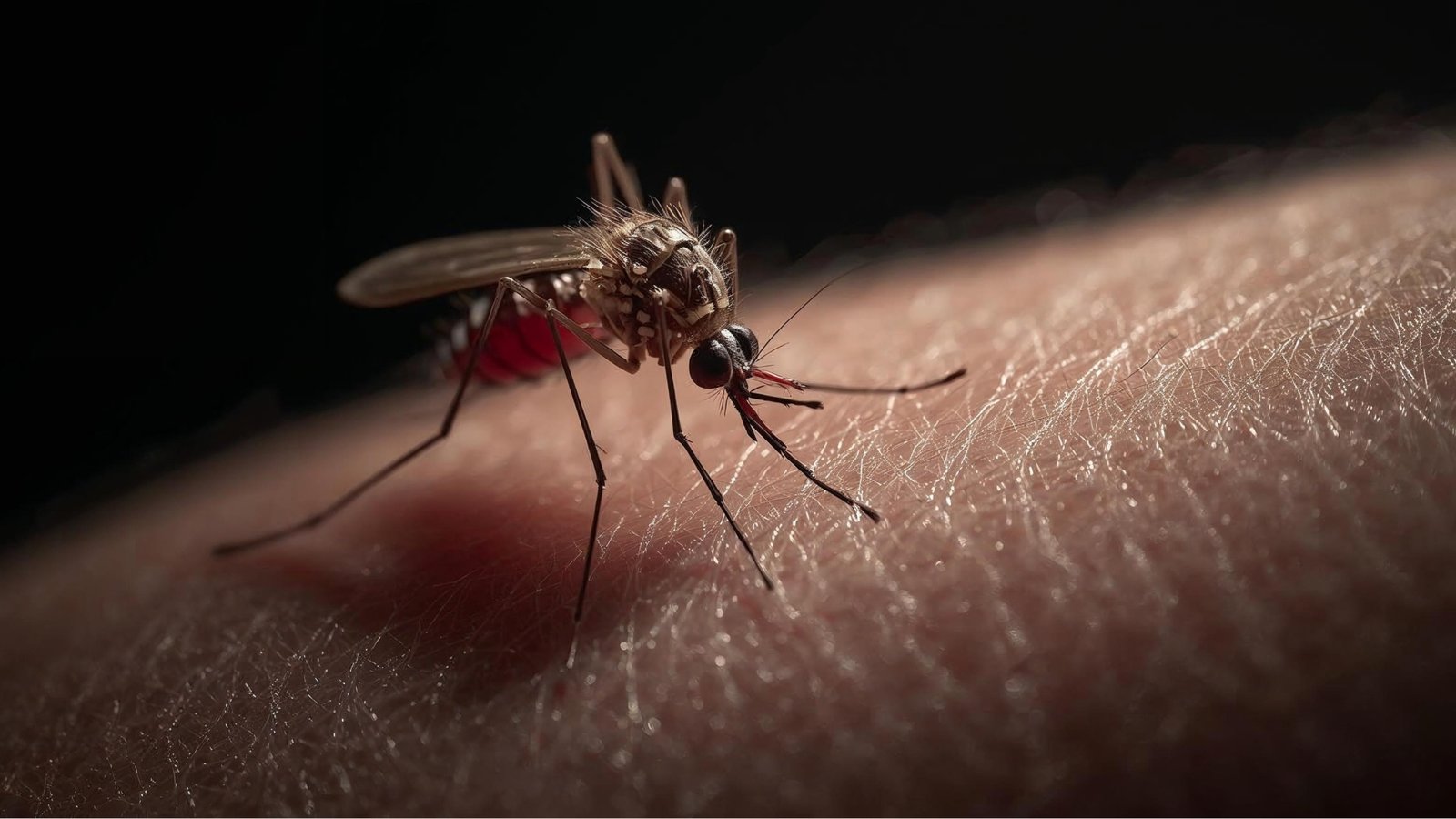
Only female mosquitoes bite. They do it because they need the protein and iron in blood to produce eggs, and blood is the richest available source of those nutrients. A blood meal is not food in the ordinary sense. It does not feed the mosquito’s own body. It fuels reproduction (American Mosquito Control Association; Centers for Disease Control and Prevention).
Male mosquitoes do not bite at all. Their mouthparts are not built to pierce skin and draw blood, and they have no reproductive need for a blood meal. Males feed only on plant nectar and other sugar sources, and so do females when they are not producing eggs (American Mosquito Control Association).
The egg connection
For a female mosquito, blood is about eggs. Her eggs cannot mature on sugar alone. They need protein and iron, and a blood meal delivers both in a concentrated form. After she feeds, her body breaks the blood down and uses it to build a batch of eggs, then she seeks water to lay them (American Mosquito Control Association).
This is why the female bites again and again over her life. Each new batch of eggs generally follows a fresh blood meal, so the drive to bite is tied directly to reproduction rather than to hunger (Centers for Disease Control and Prevention). As one immunologist puts it, “It is mainly females that drink blood when they need protein and iron to nourish their developing eggs” (University of Pittsburgh Department of Immunology).
Different mouthparts
The reason males cannot bite comes down to anatomy. The female’s mouth is a long, specialized structure called a proboscis, and it is adapted for piercing skin and sucking blood. An outer sheath, the labium, surrounds six slender, needle-like stylets that interlock and probe for a blood vessel. Those stylets include two mandibles, two maxillae, the labrum (which carries the food canal), and the hypopharynx (which carries saliva). During feeding the sheath bends back and the six stylets slide into the skin (North Carolina State University, General Entomology).
Males have mouthparts of the same general plan, but the cutting parts are reduced and are not suited to piercing skin, so males feed only on nectar (North Carolina State University, General Entomology; American Mosquito Control Association). The tools that let a female open skin and reach blood are, in practical terms, a female feature.
How a female bite works
When a female pierces the skin, she does not simply draw blood. She first injects saliva, and that saliva does the quiet work that makes feeding possible. It contains anticoagulant proteins that keep the blood from clotting so it can flow freely up the proboscis while she feeds (University of Pittsburgh Department of Immunology).
That same saliva is what makes a bite itch. The saliva proteins bind to receptors on sensory nerve endings and set off a small, localized immune response, which leads to the release of histamine. Histamine increases inflammation and stimulates nerve endings, and the result is the familiar itch and the raised welt (University of Pittsburgh Department of Immunology). For a fuller look at that reaction, see Why do mosquito bites itch.
What this means
The practical takeaway is simple. The mosquitoes that bite you, and the only mosquitoes that can carry disease from one host to another, are egg-laying females looking for the protein to reproduce. Males are harmless to people. So mosquito control and personal protection are really about stopping biting females and denying them the standing water they need to lay eggs. For steps that work, see Mosquito prevention.
Sources
- American Mosquito Control Association, “FAQs” (states that only females seek blood meals for the proteins needed to produce eggs, that blood serves no nourishment function, and that males do not bite and feed on plant nectar). https://www.mosquito.org/faqs/ (accessed 20 July 2026).
- American Mosquito Control Association, “Mosquito Biology” (states that only females require a blood meal and bite, that acquiring a blood meal of protein is essential for egg production, and that both sexes are nectar feeders for nutrition). https://www.mosquito.org/mosquito-biology/ (accessed 20 July 2026).
- Centers for Disease Control and Prevention, “About Mosquitoes” (states that only female mosquitoes bite to get a blood meal and that females need a blood meal to produce eggs; page returned an access block on direct fetch, claim confirmed via the published search summary of the same URL). https://www.cdc.gov/mosquitoes/about/index.html (accessed 20 July 2026).
- North Carolina State University, Department of Entomology and Plant Pathology, General Entomology (ENT 425), “Mouthparts” (describes the female mosquito proboscis, the six interlocking stylets, and notes that males have similar mouthparts but feed only on nectar). https://genent.cals.ncsu.edu/bug-bytes/mouthparts/ (accessed 20 July 2026).
- University of Pittsburgh, Department of Immunology, “Ask an Immunologist: Why Does a Mosquito Bite Itch?” (states that mainly females drink blood for protein and iron to nourish developing eggs, that saliva contains anticoagulant proteins, and that the saliva triggers an immune response and histamine release that causes the itch). https://www.immunology.pitt.edu/news/ask-immunologist-why-does-mosquito-bite-itch (accessed 20 July 2026).
Related
Educational note: This page is for general information about mosquito biology. It is not medical advice. If you have a severe reaction to a bite or a concern about a mosquito-borne illness, contact a healthcare provider or your local health department.
Last reviewed 20 July 2026.