Short answer
Chigger bites are intensely itchy welts that cluster where clothing fits tightly against the skin, such as the ankles, the waistband, and behind the knees, and they show up a few hours after time spent in grass or brush. Mosquito bites tend to be puffier, more scattered, and land on exposed skin such as the face, arms, and lower legs (Sources 1, 2, 3).
The two clues that separate them most reliably are location and timing. A tight cluster of bumps along a sock line or waistband, appearing hours after you were outside in tall grass, points to chiggers. A puffy bump or two on bare skin that swelled up within minutes points to a mosquito (Sources 1, 3).
Side-by-side comparison
| Feature | Mosquito | Chigger |
|---|---|---|
| Location | Exposed skin, such as face, hands, arms, feet, and lower legs (Source 3) | Where clothing is tight against skin, such as ankles, lower legs, behind the knees, waist, and groin (Source 1) |
| Appearance | Round, puffy, raised bump, often with a small dot in the center; usually scattered (Sources 2, 3) | Red bumps or pimples, often in a speckled line or cluster along a clothing seam or waistband (Source 1) |
| Itch intensity | Itchy, sometimes strongly, but usually settles in a few days (Source 2) | Intensely itchy, most severe in the first 24 to 48 hours, and can persist up to about two weeks (Source 1) |
| Timing | Bump appears within minutes; a harder itchy bump may follow a day later (Sources 2, 3) | Itch is delayed, often not felt until up to three hours after the mite attaches (Source 1) |
| Setting | Any place mosquitoes are active, indoors or out, especially at dawn and dusk (Source 3) | After sitting, walking, or working in grass, weeds, brush, or wooded areas (Sources 4, 5) |
The mosquito bite in brief
A mosquito bite is the body’s reaction to proteins in mosquito saliva. When a female mosquito feeds, she leaves saliva behind, the immune system treats it as an allergen and releases histamine, and the result is a bump that itches and swells (Source 2).
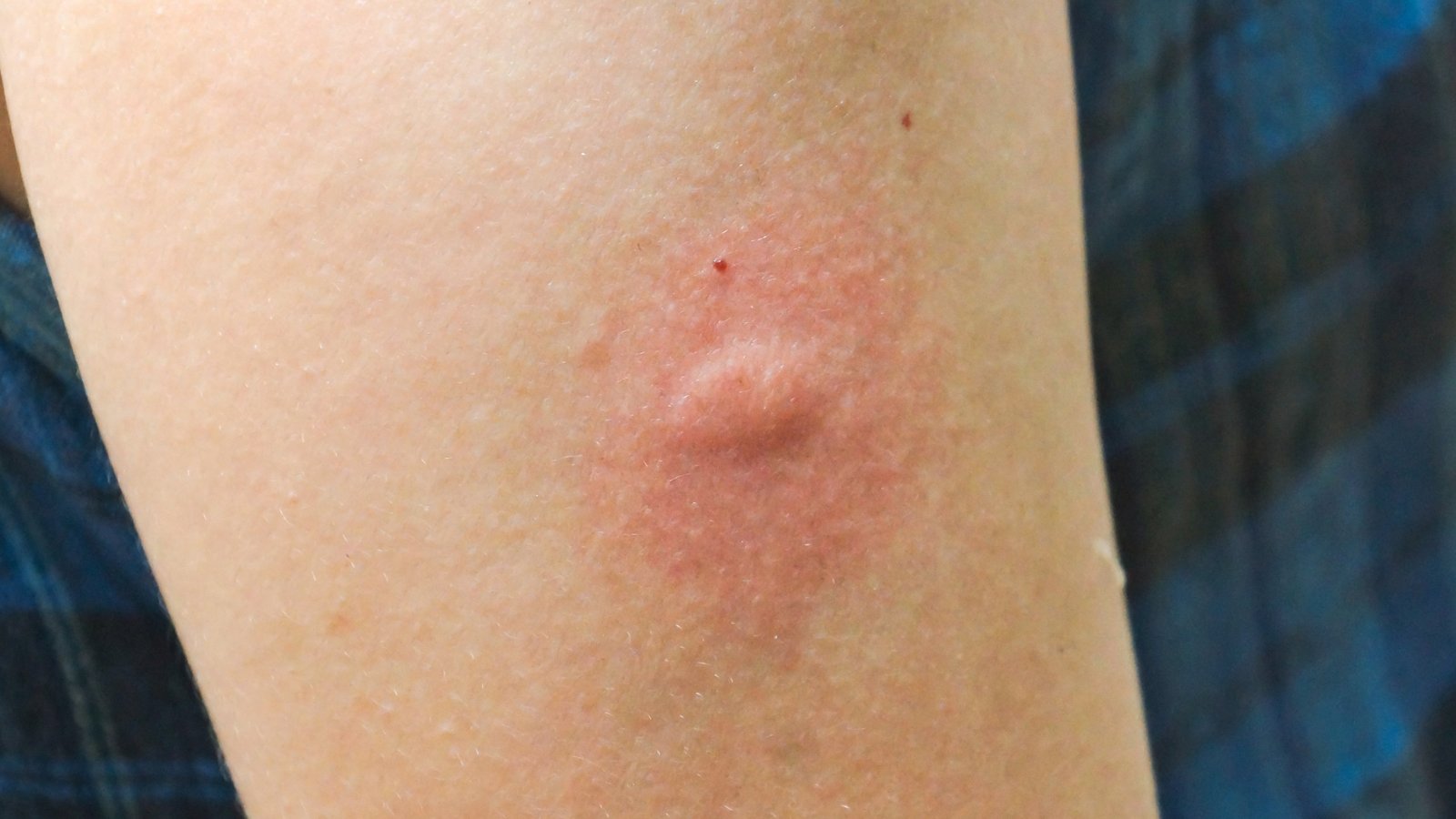
The typical bite is a small, raised, puffy bump, and you can often see a tiny dark spot in the center where the mouthparts pierced the skin. A puffy reddish bump usually appears within a few minutes, and a day or so later it can settle into a harder, itchy bump (Sources 2, 3). Mosquitoes go for skin that is left bare, so bites land on the face, hands, arms, feet, and legs, and they tend to be scattered rather than lined up (Source 3). Most bites clear up on their own within a few days (Source 2).
The chigger bite in brief
Chiggers are the larval stage of trombiculid mites, close relatives of ticks and spiders, and they are so small that they are almost invisible to the naked eye (Source 1). They pick up a host in grass, weeds, brush, and wooded areas, then move across the skin until they reach a spot where clothing holds them against the body (Sources 4, 5). That is why the bites form tell-tale lines and clusters along sock tops, waistbands, and other tight seams, and why they favor the ankles, lower legs, behind the knees, waist, and groin (Source 1).
The itch is delayed. It can take up to three hours after the mite attaches before you feel anything, and once it starts it is intense, peaking over the first 24 to 48 hours and slowly fading over about two weeks (Source 1).
Two widespread myths are worth correcting:
- Chiggers do not burrow into the skin. They attach at the surface, usually at the base of a hair follicle, and inject digestive fluid that dissolves skin cells so they can feed. It is the body’s reaction to that saliva and digestive fluid that causes the itching, not a mite tunneling under the skin. Because they do not burrow, there is nothing buried that needs to be dug out (Sources 1, 5).
- Nail polish does not help. Painting a bite with nail polish is meant to suffocate a mite that is not actually there, since by the time the itching starts the chigger has usually already dropped off. Covering the welts with nail polish or other harsh chemicals does nothing useful and can irritate the skin (Source 5).
How to tell which you have
When the appearance is ambiguous, the setting and the location usually settle it.
- Retrace where you were. Chiggers come from grass, weeds, brush, and wooded areas, so bites that appear after yard work, hiking, or sitting in the grass fit chiggers. Mosquito bites can happen almost anywhere mosquitoes are active, including indoors and around dawn and dusk (Sources 3, 4, 5).
- Look at the pattern and the placement. A tight cluster or speckled line of welts along a sock top, waistband, or other snug clothing line strongly suggests chiggers. Puffier bumps scattered across bare skin such as the arms, face, or lower legs suggest mosquitoes (Sources 1, 3).
- Think about the timing. If the bumps swelled up within minutes of being outside, that fits a mosquito. If nothing showed up until a few hours later and then turned fiercely itchy, that fits a chigger (Sources 1, 3).
Care and when to see a doctor
Care is similar for both, and it centers on calming the itch and not scratching. After likely chigger exposure, a hot, soapy shower with a washcloth helps remove any mites still on the skin. For the itch of either bite, calamine lotion, an over-the-counter hydrocortisone cream, or an oral antihistamine can help, and a cold compress can take the edge off (Sources 1, 2, 5). Try not to scratch, since broken skin invites infection (Source 2).
See a clinician if a bite is not improving, if the itching from a chigger bite has not eased after about two weeks, or if the skin around any bite swells, oozes pus, or turns into an open sore, which can signal a skin infection (Sources 1, 2). For mosquito bites, also seek care if you develop fever, headache, or body aches along with the bites, since mosquitoes can transmit disease, or if you have signs of a serious allergic reaction (Sources 2, 3).
Sources
- Cleveland Clinic, Chigger Bites (What They Look Like, Treatment and Prevention). Larval trombiculid mites, almost invisible; bites cluster where clothing fits tightly, ankles, lower legs, behind the knees, waist, and groin; speckled line or cluster of red bumps; itch delayed up to three hours, most intense in the first 24 to 48 hours, fading over about two weeks; chiggers do not burrow; treatment and when to seek care. https://my.clevelandclinic.org/health/diseases/23267-chigger-bites (accessed 2026-07-20)
- Cleveland Clinic, Mosquito Bites (What They Look Like, Why They Itch and Treatment). Raised bump with a small central dot; reaction to saliva proteins and histamine; bites last a few days; treatment; when to see a doctor. https://my.clevelandclinic.org/health/diseases/17695-mosquito-bites (accessed 2026-07-20)
- Mayo Clinic, Mosquito bites (Symptoms and causes). Puffy reddish bump within minutes; harder itchy reddish-brown bump a day later; bites on exposed skin; larger reactions and warning signs that warrant medical care. https://www.mayoclinic.org/diseases-conditions/mosquito-bites/symptoms-causes/syc-20375310 (accessed 2026-07-20; page returned 403, content confirmed via search result snippet)
- Oklahoma State University Extension, The truth about chiggers. Chiggers are picked up in grass, weeds, and brush; they are larval mites that do not burrow and feed via digestive enzymes at the skin surface. https://extension.okstate.edu/articles/2023/chiggers (accessed 2026-07-20; page returned 403, content confirmed via search result snippet)
- Mississippi State University Extension, Chiggers: Step Away from the Nail Polish. Chiggers attach at the base of a hair follicle and inject digestive fluid that dissolves skin cells; the itch is a reaction to that saliva and digestive fluid; nail polish and harsh chemicals do not help; wash in hot soapy water and treat the itch with calamine or antihistamines. https://extension.msstate.edu/blogs/extension-for-real-life/chiggers-step-away-the-nail-polish (accessed 2026-07-20)
Related
- [RELATED: What a mosquito bite looks like]
- [RELATED: How to stop a mosquito bite from itching]
- [RELATED: Mosquito bites vs other bug bites]
- [RELATED: How long does a mosquito bite last]
Educational note: This page is for general information and is not medical advice. If a bite worsens, shows signs of infection, or comes with fever or other whole-body symptoms, contact a clinician.
Last reviewed 20 July 2026.