Short answer
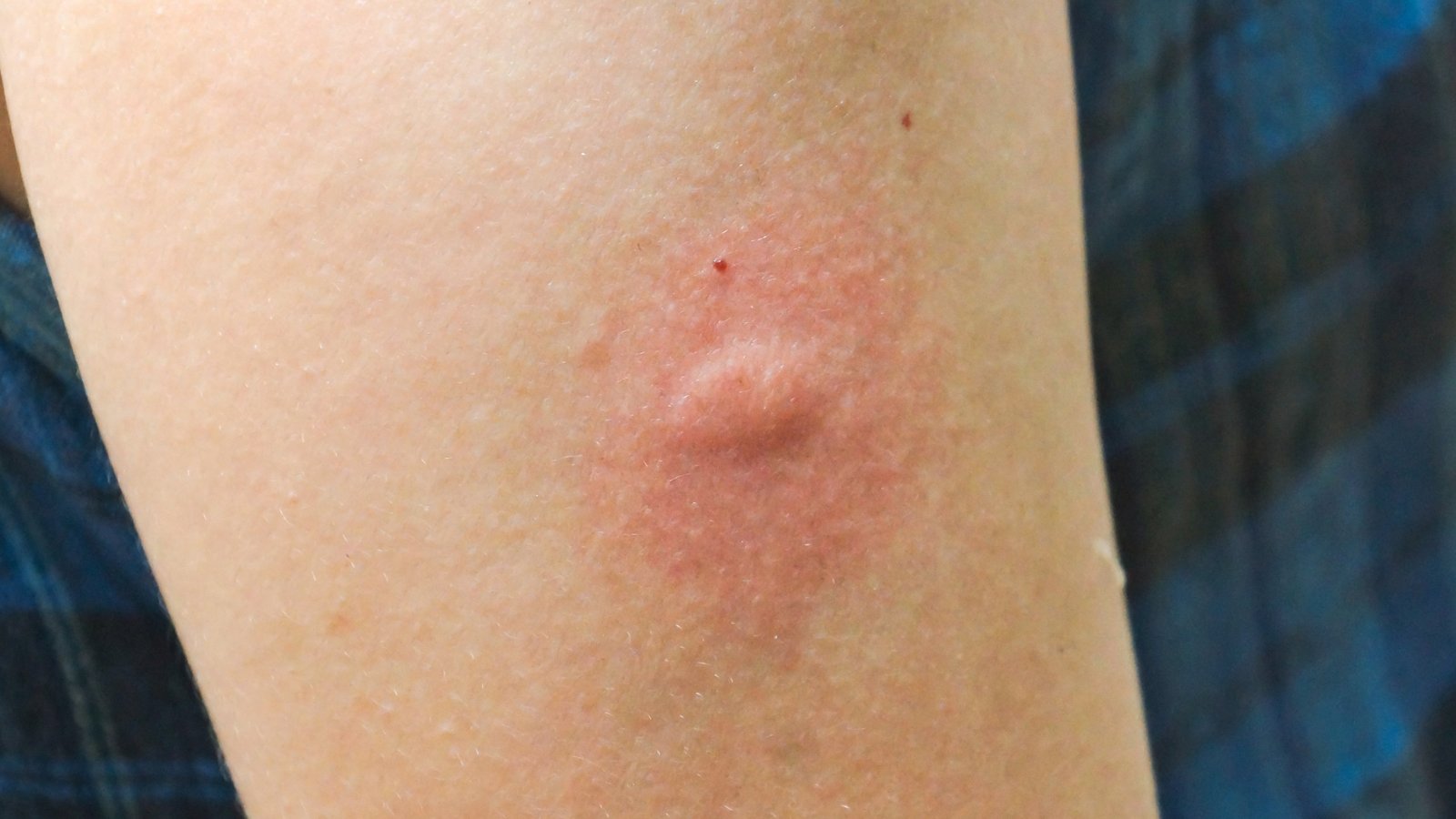
You often cannot tell for sure whether a bite came from a mosquito or a bedbug by looking at the mark alone. Both show up as itchy, raised, reddish bumps, and both can vary a lot from person to person. Skin experts are direct about this: a red skin lesion by itself does not confirm what caused it, and with bedbugs the only way to be certain is to actually find the bugs (University of Minnesota Extension).
So the bite is a weak clue. The stronger clues are the pattern (single scattered bumps versus lines or small clusters), where the bites are (any uncovered skin versus areas touching the bed), when you notice them (soon after being outdoors versus waking up with fresh marks), and whether there is any other evidence of an infestation in the room. Use those together rather than trying to read a single bump.
Side-by-side comparison
| Feature | Mosquito | Bedbug |
|---|---|---|
| Appearance | Small raised bump, often with a tiny dark spot in the center; may turn puffy or hive-like (Mayo Clinic; Cleveland Clinic) | Raised bump, sometimes with a darker red center and a lighter ring; may form welts, blisters, or hives (Cleveland Clinic) |
| Pattern | Usually single, scattered bumps with no set arrangement (Mayo Clinic) | Often a line, zigzag, or small cluster; the “breakfast, lunch, and dinner” row (Cleveland Clinic; University of Minnesota Extension) |
| Timing | Itchy bump appears within minutes of the bite (Mayo Clinic) | Bite is not felt; marks can take one to a couple of days to appear (Cleveland Clinic) |
| Location | Any uncovered skin, indoors or out (Mayo Clinic) | Skin exposed during sleep: face, neck, arms, hands, legs, back (Cleveland Clinic; University of Minnesota Extension) |
| Itch | Itchy for a few hours to a few days (Mayo Clinic) | Itchy, and reactions can be more intense and last longer than mosquito bites (University of Minnesota Extension) |
| Other signs | None beyond the bite in most cases (Mayo Clinic) | Rust or dark fecal spots on sheets and mattress, shed skins, live bugs in seams; a musty odor in heavier infestations (Cleveland Clinic; University of Minnesota Extension) |
The mosquito bite in brief
A mosquito bite is the itchy bump that forms after a female mosquito feeds on your blood. It usually appears as a small, raised bump, sometimes with a tiny dark spot in the center, and it can turn puffy or hive-like. The reaction tends to show up within minutes, and the bumps usually settle on their own within a few days (Mayo Clinic; Cleveland Clinic).
Mosquito bites do not follow a set pattern. They tend to be single, scattered bumps on whatever skin was uncovered, and they can happen anywhere you were exposed to mosquitoes, indoors or outside (Mayo Clinic). Most cause nothing worse than itching, though some people react more strongly with larger swelling, hives, or blisters (Mayo Clinic).
The bedbug bite in brief
Bedbugs feed at night while you sleep, so the bites land on skin left uncovered by bedding and clothing: commonly the face, neck, arms, hands, and legs (Cleveland Clinic; University of Minnesota Extension). You typically do not feel the bite happen, and the marks may not show up until one to a couple of days later (Cleveland Clinic).
A recognizable clue is the arrangement. Bedbug bites often appear in a line, a zigzag, or a small cluster, sometimes described as the “breakfast, lunch, and dinner” pattern because the bug pauses, moves a short distance, and feeds again (Cleveland Clinic; University of Minnesota Extension). Still, reactions range widely, from no reaction at all to a mild red spot to a rash or hives, and they can be mistaken for flea bites, mosquito bites, or skin irritation (University of Minnesota Extension).
Because the bite alone is not proof, look for the bug’s other traces: reddish or rust-colored stains and dark fecal spots on sheets, pillowcases, and the mattress; shed exoskeletons (cast skins); live bugs in the folds and seams of bedding and the mattress; and, in heavier infestations, a sweet, musty odor (Cleveland Clinic; University of Minnesota Extension).
How to tell which you have
Start by looking for physical evidence rather than studying the bite. Finding the bugs, their dark fecal spots, or shed skins on the mattress and bedding is the only way to confirm bedbugs; a bite mark by itself cannot do it (University of Minnesota Extension). Check the seams of the mattress, the box spring, the headboard, and the folds of sheets.
Then weigh the timing and setting. Bites you notice soon after being outdoors, in the yard, or in a buggy area, appearing as scattered single bumps, point toward mosquitoes (Mayo Clinic). Fresh bites that you keep finding when you wake up, arranged in lines or clusters on skin that was uncovered in bed, point toward bedbugs, especially if you also find the signs above (Cleveland Clinic; University of Minnesota Extension). If you have recently traveled and slept somewhere new, that is another reason to inspect for bedbugs.
When to see a doctor
For most bites, washing with soap and water and using an over-the-counter hydrocortisone cream or an oral antihistamine is enough to calm the itch (American Academy of Dermatology). Consider medical care in these situations:
- A bite looks infected, or scratching has left sores that are puffy, red, or oozing (Cleveland Clinic; American Academy of Dermatology).
- Itching is severe enough to disrupt your day or sleep (Cleveland Clinic).
- You have many bites, or you develop a fever, headache, body aches, or a spreading rash after a bite (American Academy of Dermatology).
- You have signs of a severe allergic reaction, such as hives spreading beyond the bite, swelling of the throat, wheezing, or faintness; this is an emergency (Cleveland Clinic).
Bedbugs are not known to spread disease to people, though their bites can cause itching, lost sleep, and, rarely, allergic reactions (CDC). Mosquitoes, by contrast, can carry illnesses such as West Nile virus and dengue, so see a provider if you develop a fever or other symptoms after bites in an area where mosquito-borne disease is a concern (Cleveland Clinic).
Sources
- Mayo Clinic, “Mosquito bites, Symptoms and causes” (bite appearance, timing within minutes, scattered pattern, more severe reactions). https://www.mayoclinic.org/diseases-conditions/mosquito-bites/symptoms-causes/syc-20375310 (accessed 20 July 2026; page returned HTTP 403, details drawn from the search-result summary of this page)
- Cleveland Clinic, “Mosquito Bites” (raised bump with a dark central spot, itch duration, allergic reactions, mosquito-borne diseases, when to see a provider). https://my.clevelandclinic.org/health/diseases/17695-mosquito-bites (accessed 20 July 2026)
- Cleveland Clinic, “Bedbugs” (line/zigzag/cluster pattern, exposed-skin locations, delayed appearance, infestation signs, when to see a provider). https://my.clevelandclinic.org/health/diseases/17847-bedbugs (accessed 20 July 2026)
- University of Minnesota Extension, “Bed bugs” (reactions vary and can be confused with other bites, bites cannot confirm bedbugs, bite locations, fecal spots and cast skins). https://extension.umn.edu/biting-insects/bed-bugs (accessed 20 July 2026)
- CDC, “About Bed Bugs” (bedbugs are not known to spread disease; bites can cause itching, lost sleep, and rarely allergic reactions). https://www.cdc.gov/bed-bugs/about/index.html (accessed 20 July 2026; page returned HTTP 403, statement drawn from the search-result summary of this page)
- American Academy of Dermatology, “Bug bites and stings: When to see a dermatologist” (home care, signs of infection, and symptoms that warrant a dermatologist). https://www.aad.org/media/news-releases/bug-bites-and-stings-when-to-see-a-doctor (accessed 20 July 2026)
Related
- Mosquito bite vs flea bite (placeholder)
- Mosquito bite vs tick bite (placeholder)
- Mosquito bite vs spider bite (placeholder)
- How to treat a mosquito bite (placeholder)
Educational note: This page is for general information and is not medical advice. It does not replace evaluation by a qualified clinician. If you are concerned about a bite, an infection, or a possible infestation, contact a healthcare provider or a licensed pest professional.
Last reviewed 20 July 2026.