Short answer
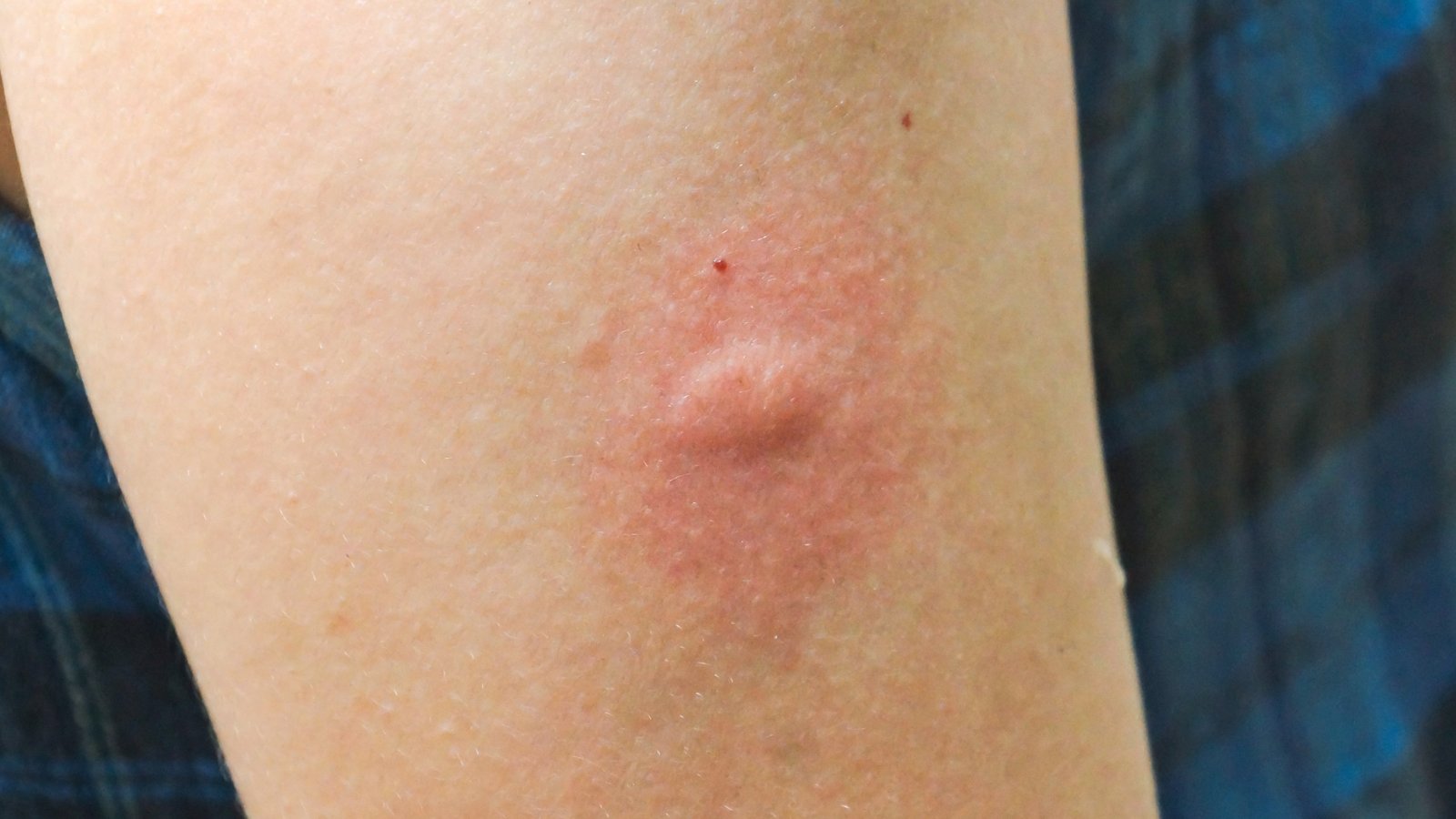
When a mosquito feeds, it injects a small amount of saliva into your skin. That saliva contains anticoagulant proteins that keep your blood flowing while the mosquito draws it (Source 1). Your immune system recognizes those proteins as foreign and reacts to them. Part of that reaction is the release of histamine, a chemical that inflames the tissue and stimulates nearby nerve endings. Histamine is the main reason a fresh bite itches, reddens, and swells (Source 1, Source 4).
The saliva and histamine reaction
A mosquito does not simply puncture the skin. As it probes for a blood vessel, it releases saliva that carries a mix of proteins, including salivary odorant-binding proteins and other allergenic components (Source 2). These proteins serve the mosquito by preventing your blood from clotting during feeding, but your body treats them as intruders.
The immune response runs largely through mast cells, a type of immune cell in the skin. Antibodies of the IgE class, primed against mosquito saliva proteins, sit on the surface of these mast cells. When saliva proteins bind to that IgE, the mast cells release inflammatory mediators, including histamine, cytokines, tryptase, and eicosanoids (Source 2). Histamine increases blood flow and inflammation at the site and stimulates sensory nerve endings, which the brain interprets as itch (Source 1, Source 4). The redness and the raised bump are part of the same reaction.
Why the itch is delayed or immediate
Most people react to a bite in two phases.
The immediate reaction appears within minutes. A round wheal roughly 2 to 10 mm across forms, with surrounding redness that peaks about 20 to 30 minutes after the bite (Source 2). This fast response is driven by IgE and mast cell histamine release.
The delayed reaction comes later. Itchy papules of similar size develop and peak around 24 to 36 hours after the bite, then fade over several days (Source 2). Delayed reactions involve IgG antibodies and T cells rather than the immediate histamine burst, which is why they build slowly and last longer (Source 3). This two-phase pattern is why a bite can itch right away, calm down, and then flare again the next day.
Why some people itch more
Reactions to mosquito bites are learned by the immune system over time, and researchers have described the process as a progression through five stages (Source 2, Source 3).
Someone who has never been exposed to a given mosquito species may show no reaction to the first bites (stage 1). After repeated bites, delayed reactions appear (stage 2), then both immediate and delayed reactions (stage 3). With continued exposure the delayed reaction drops away and only the immediate wheal remains (stage 4). After very heavy, prolonged exposure to the same species, even the immediate reaction can fade (stage 5) (Source 2, Source 3).
This is why children, whose immune systems are still building this history, often react strongly, and why some heavily exposed adults barely react at all. Where a person sits on this scale depends on their individual exposure history, so two people bitten by the same mosquito can respond very differently. A small number of people have unusually strong reactions, sometimes called skeeter syndrome (Source 4).
Why scratching makes it worse
Scratching feels like relief, but it tends to prolong the itch. Scratching stimulates pain-sensing nerves, which release signaling molecules that further activate mast cells, feeding more histamine into the area and renewing the itch cycle (Source 4).
Scratching also carries a physical risk. A bite already leaves a tiny break in the skin, and scratching opens it further, giving bacteria from your hands and skin surface a way in. This can lead to a bacterial skin infection such as cellulitis (Source 1, Source 5). Repeated scratching can also leave excoriations, scarring, and darkened skin (Source 2). For ways to calm the itch without scratching, see How to stop mosquito bites from itching.
Sources
- Cleveland Clinic. Mosquito Bites: What They Look Like, Why They Itch and Treatment. (Consumer health reference; saliva, immune recognition, histamine, and infection risk from scratching.) https://my.clevelandclinic.org/health/diseases/17695-mosquito-bites (accessed 20 July 2026)
- Juckett G, et al. Update on mosquito bite reaction: Itch and hypersensitivity, pathophysiology, prevention, and treatment. PMC. (Peer-reviewed review; saliva proteins, mast cell and IgE mechanism, wheal size and timing, delayed papule timing, five-stage model, scratching sequelae.) https://pmc.ncbi.nlm.nih.gov/articles/PMC9532860/ (accessed 20 July 2026)
- StatPearls, NCBI Bookshelf. Mosquito Bites. (Peer-reviewed clinical reference; five reaction stages, immediate versus delayed immune pathways, cellulitis from excoriation.) https://www.ncbi.nlm.nih.gov/books/NBK539915/ (accessed 20 July 2026)
- University of Pittsburgh Department of Immunology. Ask an Immunologist: Why Does a Mosquito Bite Itch. (Academic immunology explainer; anticoagulant saliva, histamine and itch, scratch-itch cycle, variation between people.) https://www.immunology.pitt.edu/news/ask-immunologist-why-does-mosquito-bite-itch (accessed 20 July 2026)
- Cleveland Clinic. What Happens When a Mosquito Bite Gets Infected and What To Do. (Consumer health reference; scratching, broken skin, and cellulitis risk.) https://health.clevelandclinic.org/what-happens-when-a-mosquito-bite-gets-infected-and-what-to-do (accessed 20 July 2026)
Related
- How to stop mosquito bites from itching [placeholder]
- Skeeter syndrome: when a bite reaction is severe [placeholder]
- How long do mosquito bites last [placeholder]
Educational note: This page is for general education and is not medical advice. If a bite becomes very swollen, painful, warm, or shows spreading redness or signs of infection, contact a licensed healthcare professional.
Last reviewed 20 July 2026.