Short answer
Colorado is consistently one of the worst West Nile virus states in the country, and in bad years it leads the nation outright. The main driver is Culex tarsalis, a mosquito that thrives along the South Platte River and in the irrigated valleys of the northern Front Range. In 2023, Colorado reported 634 human West Nile cases, with 386 people hospitalized and 51 deaths, the most total human cases of any state that year and its highest death toll since 2003 (Sources 1, 2). Eight of the ten hardest-hit counties in the country that season were in Colorado (Source 2). West Nile is by far the state’s dominant mosquito-borne concern, and the high-risk window is late summer along the Front Range and the eastern plains.
Mosquito season
Colorado’s mosquito season is a summer season. Along the Front Range and the eastern plains, Culex tarsalis becomes active in late spring, and the highest West Nile risk runs from roughly mid-June through August, tapering off in September as overnight temperatures fall (Sources 4, 7). A mild, wet fall can extend biting activity later into the year, and in recent seasons state officials have noted mosquitoes arriving earlier than usual after wet springs (Source 10).
Elevation shortens the season. Culex tarsalis, the key West Nile vector, is common up to about 8,500 feet and has been found as high as 10,000 feet, but at higher elevations the frost-free window is shorter and the biting season is correspondingly compressed (Source 4). The heaviest and longest exposure is in the lower, warmer, irrigated country east of the mountains, not in the high country.
The mosquitoes you meet
Two groups matter in Colorado, and only one drives disease.
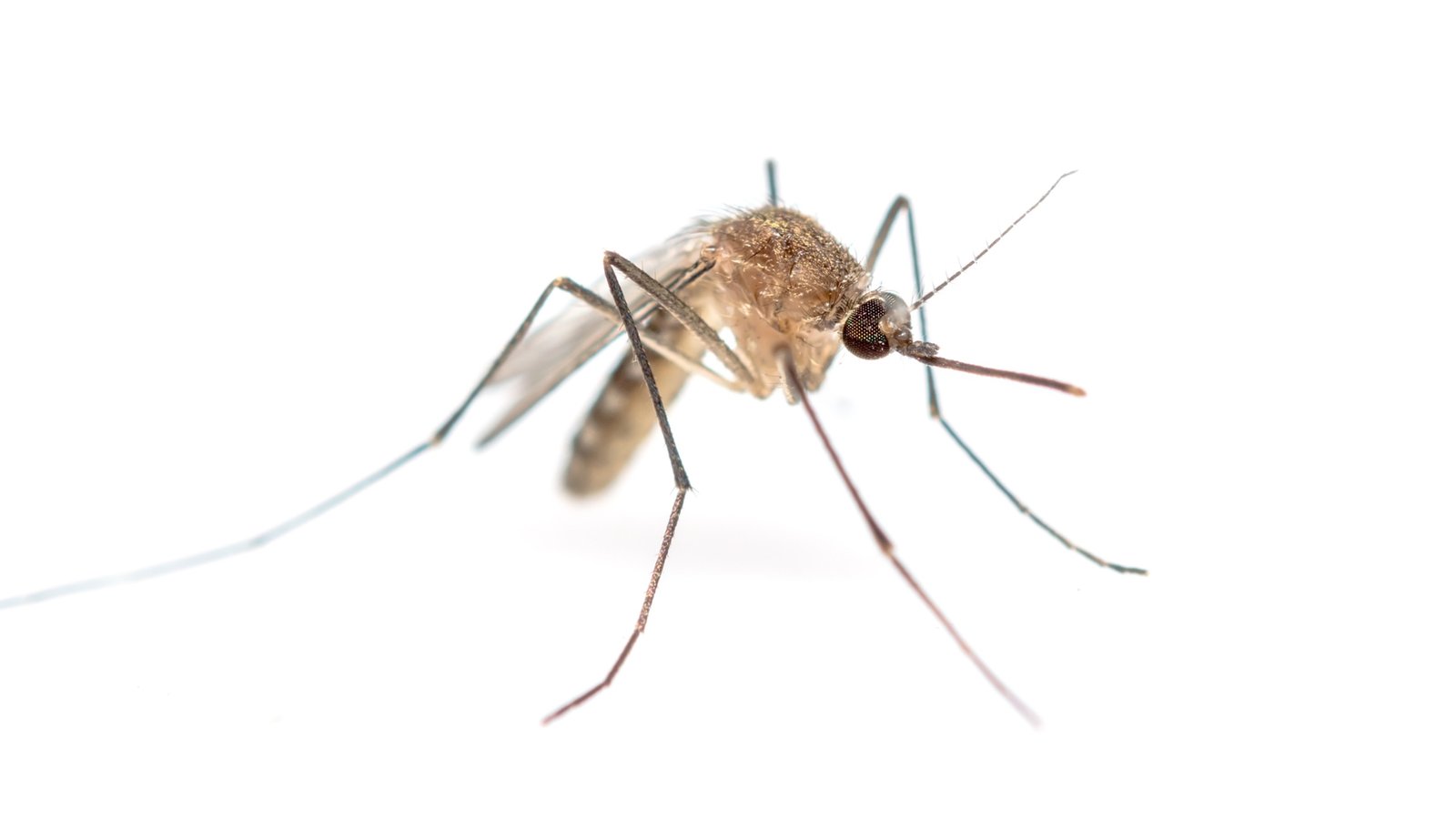
Culex mosquitoes carry West Nile virus. Culex tarsalis is the primary vector across the state and is especially abundant in irrigated agricultural land, where reservoirs, ditches, and furrows create abundant breeding water. Culex pipiens, the northern house mosquito, also occurs in Colorado and contributes to transmission (Source 4). These are the species that county surveillance programs trap and test through the summer. (See our Culex species page for identification and behavior.)
Floodwater Aedes mosquitoes are the nuisance biters. Species in the Aedes and related groups hatch in large numbers after heavy rain, snowmelt, or flood irrigation and can make the outdoors miserable, but they are not the main West Nile carriers in Colorado. They matter for comfort and for the pressure they put on local control programs rather than for disease. (See our Aedes species page.)
Disease risk
West Nile virus is, by a wide margin, the mosquito-borne disease that matters in Colorado. Most people who are infected never feel sick, but about one in five develop fever and other symptoms, and a small share develop serious neuroinvasive disease affecting the brain and spinal cord.
The 2023 season shows the scale that is possible. Colorado recorded 634 human cases, 386 hospitalizations, and 51 deaths, the most total cases of any state and the highest state death toll since the record 2003 outbreak, which caused 2,948 cases and 66 deaths (Sources 1, 2). Colorado also had the highest West Nile incidence in the country in 2023 (Source 3). An unusually wet spring and summer, which expanded mosquito breeding across the Front Range, is widely cited as the reason for the heavy year. The northern Front Range corridor of Larimer, Boulder, and Weld counties is a long-recognized hyperendemic area, and irrigated agriculture there is an established risk factor for human West Nile disease (Source 5). River corridors such as the South Platte serve as dispersal routes for Culex tarsalis across the plains, while the Continental Divide acts as a barrier that largely keeps this vector east of the mountains (Source 6). (See our West Nile virus disease page.)
Local control
Mosquito control in Colorado is organized locally, and the most developed programs are along the northern Front Range. Cities and counties such as Fort Collins, Loveland, Longmont, Boulder, and Larimer County run weekly surveillance through the summer, often in partnership with Colorado State University and private contractors like Vector Disease Control International (Sources 7, 8). Fort Collins, for example, operates a network of dozens of traps across the city, sorts the catch to count Culex mosquitoes, and sends samples to Colorado State University to test how many carry West Nile virus (Source 7).
The emphasis is on larviciding, treating standing water to kill mosquito larvae before they can fly, typically with naturally occurring soil bacteria (Bti and related products). This is preferred over spraying adult mosquitoes, which uses products such as permethrin and is generally held in reserve (Source 8). Front Range programs commonly tie adult spraying to a combination of triggers, for example when trap counts climb past a set threshold and West Nile virus is confirmed in local mosquitoes (Source 7).
Public health messaging across the state centers on the Four Ds:
- Drain standing water around the home at least weekly.
- Dusk and dawn, limit time outdoors when Culex mosquitoes bite most.
- Dress in long sleeves and long pants when mosquitoes are active.
- DEET, or another EPA-registered repellent, on exposed skin (Sources 4, 9).
Protect yourself
The steps that work are the same ones Colorado public health agencies recommend statewide, and they are aimed squarely at Culex tarsalis:
- Use an EPA-registered repellent (DEET, picaridin, IR3535, or oil of lemon eucalyptus / para-menthane-diol) and follow the label (Source 9).
- Wear long sleeves and long pants during the dusk-to-dawn hours when Culex mosquitoes are most active (Sources 4, 9).
- Repair window and door screens and keep them closed.
- Dump and drain standing water weekly: buckets, plant saucers, tires, toys, wading pools, and clogged gutters. Irrigation runoff and neglected water features are common breeding sources.
- Watch local surveillance reports during July and August, when Front Range and eastern-plains risk peaks, and follow your county or city vector control guidance.
Sources
- Colorado Department of Public Health and Environment, “West Nile virus data.” Primary source for the 2023 state totals: 634 human cases, 386 hospitalizations, and 51 deaths. https://cdphe.colorado.gov/animal-related-diseases/west-nile-virus/west-nile-virus-data (page returned HTTP 403 on 2026-07-20; figures confirmed via the CDPHE data listing in the WebSearch result summary and corroborated by Source 2). Accessed 2026-07-20.
- 9News (KUSA), “Colorado has most West Nile virus cases in U.S. so far this year, and it’s not even close” (2023). Source for Colorado leading the nation in total cases, the 2003 record year (2,948 cases, 66 deaths), and the county breakdown showing eight of the ten hardest-hit U.S. counties in Colorado (including Weld, Larimer, Arapahoe, Jefferson, Adams, El Paso, and Boulder). https://www.9news.com/article/news/health/west-nile-virus-colorado-denver-2023-cases/73-4d8594e6-7935-4260-9a48-9c231e1a72f8 Accessed 2026-07-20.
- CDC / ArboNET, “West Nile Virus and Other Nationally Notifiable Arboviral Diseases, United States, 2023” (published summary). Source for Colorado having the highest West Nile incidence in the country in 2023 (5.38 per 100,000). Note: California reported the most neuroinvasive cases (334) and Colorado the second most (316), while Colorado led in total reported cases and incidence. https://www.annemergmed.com/article/S0196-0644(25)01245-4/fulltext (CDC historic-data page https://www.cdc.gov/west-nile-virus/data-maps/historic-data.html returned HTTP 403 on 2026-07-20; incidence and ranking figures taken from the published national summary and WebSearch result). Accessed 2026-07-20.
- Colorado State University Extension, “West Nile Virus and Mosquito Management.” Source for Culex tarsalis and Culex pipiens as the main vectors, the July-August activity peak, the 8,500-to-10,000-foot altitude range of Culex tarsalis, the priority on larviciding and draining standing water, and the Four Ds prevention guidance. https://extension.colostate.edu/resource/west-nile-virus-and-mosquito-management/ (page returned HTTP 403 on 2026-07-20; content confirmed via WebFetch summary of the same URL). Accessed 2026-07-20.
- Winters AM, et al., “Irrigated Agriculture Is an Important Risk Factor for West Nile Virus Disease in the Hyperendemic Larimer-Boulder-Weld Area of North Central Colorado,” Journal of Medical Entomology, 2010;47(5):939. Source for irrigated agriculture as a West Nile risk factor and the northern Front Range hyperendemic area. https://academic.oup.com/jme/article/47/5/939/883457 Accessed 2026-07-20.
- Eisen L, et al., “Mosquitoes and West Nile virus along a river corridor from prairie to montane habitats in eastern Colorado,” PubMed (PMID 20836831), 2010. Source for river corridors such as the South Platte as dispersal routes for Culex tarsalis and the Continental Divide as a barrier to the vector. https://pubmed.ncbi.nlm.nih.gov/20836831/ Accessed 2026-07-20.
- City of Fort Collins, “West Nile Virus” and mosquito spraying program pages. Source for city trap networks, Culex counting, testing of samples at Colorado State University, and the trap-threshold-plus-virus trigger for adult spraying. https://www.fcgov.com/westnile/spraying Accessed 2026-07-20.
- Larimer County Department of Health and Environment, “Mosquito Control Information.” Source for the two main control methods, larviciding with naturally occurring soil bacteria versus adulticiding with permethrin, weekly trap monitoring, and collaboration with cities and Colorado State University. https://www.larimer.gov/health/communicable-disease/west-nile-virus/mosquito-control-information Accessed 2026-07-20.
- UCHealth Today, “West Nile virus case reported in Colorado: Mosquito risks.” Source for the Four Ds framing, the June-through-September season window, and the list of EPA-registered repellent options (DEET, picaridin, IR3535, oil of lemon eucalyptus / para-menthane-diol, 2-undecanone). https://www.uchealth.org/today/west-nile-virus-in-colorado/ Accessed 2026-07-20.
- Colorado Public Radio, “Mosquitos arrived early in Colorado. Here’s what health officials are watching” (2026). Source for recent-season context on early mosquito activity after a wet spring. https://www.cpr.org/2026/06/01/colorado-mosquitoes-west-nile-look-ahead/ Accessed 2026-07-20.
Related
- Culex mosquitoes (species) [placeholder]
- Aedes mosquitoes, floodwater species (species) [placeholder]
- West Nile virus (disease) [placeholder]
- Mosquito repellents and bite prevention [placeholder]
- Mountain West region overview [placeholder]
- Regions index: mosquitoes by state [placeholder]
Educational note: This guide is for general information and public health awareness only. It is not medical advice. If you have symptoms of a mosquito-borne illness, contact a healthcare provider or your local health department. For local mosquito complaints and spraying schedules, contact your county or city vector control program.
Last reviewed 20 July 2026.