The short answer
Illinois has been one of the more significant West Nile virus states since the virus arrived, and the state’s mosquito story is built around it. West Nile was first detected in Illinois in 2001, in two dead crows found in the Chicago area, and by 2002 the state had recorded the largest human outbreak in the country that year (Illinois Department of Public Health). The virus is carried by house mosquitoes in the Culex group, which are especially active in the densely populated Chicago region. On top of that public health concern, Illinois gets large summer nuisance broods of floodwater mosquitoes after heavy rain, particularly in the river bottomlands. The upshot: a summer season centered on West Nile, heavy Culex activity around Chicago, and big floodwater surges that are a nuisance rather than a disease threat (University of Illinois Extension).
Mosquito season
Illinois has a defined summer season, roughly June through September. Cold winters shut mosquitoes down for much of the year, so unlike the Gulf Coast states, Illinois does not deal with year-round biting. Activity builds through early summer, peaks in the warm, humid heart of the season, and tapers off with the first hard frosts of autumn.
The disease calendar sits inside that window. West Nile virus is spread by Culex mosquitoes that build up over the summer, and human cases in Illinois cluster in late summer and early fall, with the highest risk period typically running from August into September (Illinois Department of Public Health). Floodwater nuisance broods can appear at any point in the warm season, arriving in waves about two weeks after heavy summer rains (University of Illinois Extension). Treat repellent and source reduction as a June-through-September routine, with the most attention paid to the late-summer weeks when West Nile is circulating most.
The mosquitoes you meet
Illinois hosts several distinct groups, and knowing which one is biting tells you what to expect.
The house mosquitoes in the Culex group are the disease-relevant ones. Culex pipiens (the northern house mosquito) and Culex restuans are the primary vectors of West Nile virus in Illinois (Scientific Reports). They breed in standing, often stagnant or polluted water, including storm sewer catch basins, and they bite mainly around dusk and after dark. These are the mosquitoes that keep West Nile circulating between birds and, occasionally, people. Work in the Chicago area found that these Culex mosquitoes fed most commonly on birds such as American robins, house sparrows, and mourning doves, with some blood meals taken from mammals including humans, which is how the virus bridges from birds to people (Journal of Medical Entomology).
The inland floodwater mosquito (Aedes vexans) is the state’s dominant nuisance biter. It lays its eggs on low-lying dry ground that is later flooded by rainfall, and heavy summer rains can hatch enormous numbers of eggs laid over the previous two or more years. Under normal summer temperatures, large broods of biting adults emerge about two weeks after heavy rains and can be a major nuisance for one to two weeks. Aedes vexans is a vicious biter that will commonly fly ten or more miles from where it emerged, so a wet stretch in the river bottomlands can push mosquitoes well into surrounding towns (University of Illinois Extension). Floodwater mosquitoes are not known to carry the human diseases of concern in Illinois, though Aedes vexans can transmit dog heartworm (University of Illinois Extension).
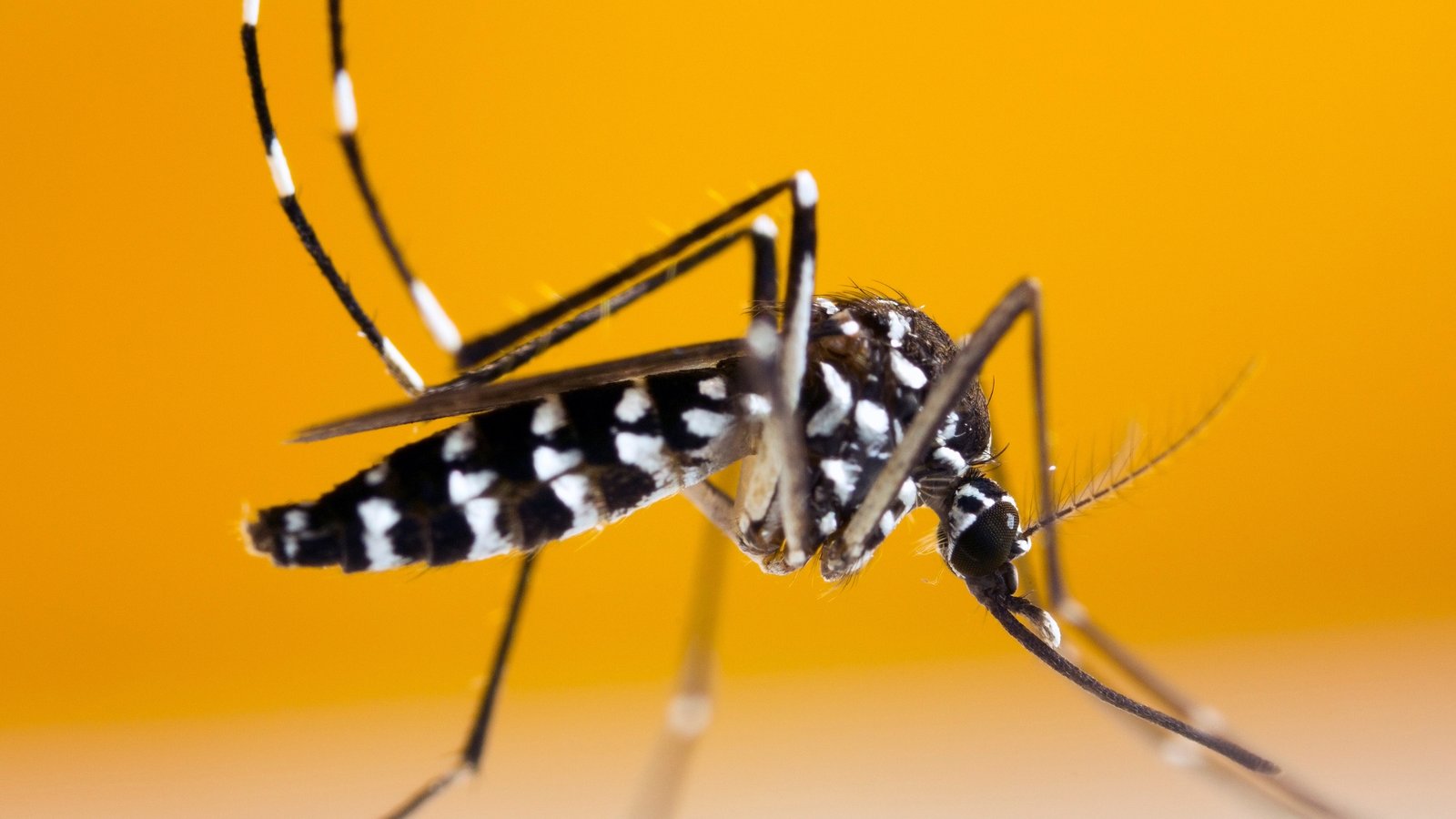
The Asian tiger mosquito (Aedes albopictus) is an expanding container-breeding species to watch. It was discovered in Peoria in 1997, survived the mild winter that followed, and expanded its local range the next year (Journal of Medical Entomology). More recent analysis of decades of Illinois occurrence data indicates that after years of repeated introductions, populations in the state now appear to be establishing and spreading through local dispersal (University of Illinois). This is a black-and-white daytime biter that breeds in small artificial containers close to homes, which makes emptying standing water in the yard a useful habit.
For identification details and biology, link to the individual species pages for Culex pipiens, Culex restuans, Aedes vexans, and Aedes albopictus.
Disease risk
West Nile virus is the leading mosquito-borne disease concern in Illinois, and the state’s place in that history is a serious one. After the virus was first found in Illinois in 2001, the 2002 season produced a major outbreak: a peer-reviewed study of that year identified 884 human cases and 66 deaths in the state, with an overall attack rate of 7.1 infections per 100,000 people (American Journal of Tropical Medicine and Hygiene). That outbreak was the largest of any state that year, accounting for about 21 percent of the national case total, and it formed part of what was then the world’s largest recorded outbreak of neuroinvasive West Nile disease (American Journal of Tropical Medicine and Hygiene). Risk rose sharply with age. The median age of cases was 56, the median age of those who died was 78, and among people who died, 91 percent had been diagnosed with encephalitis (American Journal of Tropical Medicine and Hygiene).
West Nile has remained a fixture of Illinois summers since. Case counts swing widely from year to year with weather and mosquito abundance: the state reported 119 human cases and six deaths in 2023, up sharply from 34 cases in 2022 (Illinois Department of Public Health). Most people who are infected have no symptoms, and only a small share develop serious neuroinvasive illness, but the 2002 experience is a reminder that in a bad year the toll can be heavy, especially for older adults.
For more on this illness, link to the West Nile virus disease page.
Local control
Organized mosquito control in Illinois is strongest in the Chicago region, where a network of independent mosquito abatement districts covers much of Cook and the collar counties. A central tool for these districts is catch-basin larviciding: the storm sewer catch basins that line residential streets hold water and are prime breeding sites for Culex pipiens, so districts drop extended-release larvicide products into them to kill larvae before they can emerge. The North Shore Mosquito Abatement District, for example, treats on the order of tens of thousands of catch basins across the northern suburbs each season specifically to suppress the West Nile vector (Journal of the American Mosquito Control Association). Districts also monitor larvicide performance over the season, and research in the northern suburbs has found that extended-release products do not always deliver their full labeled duration in every basin, which is why programs re-treat and track results rather than treating once and walking away (Journal of the American Mosquito Control Association).
Coverage is uneven outside the metropolitan core. Many downstate and rural areas do not sit inside an organized abatement district, so control there falls to individual municipalities or to residents. If you have a persistent problem, find out whether you live within an abatement district, since it is the right contact for surveillance questions, larviciding and spraying schedules, and reporting heavy activity.
Protect yourself
Your own steps matter, and source reduction is the core of it. At least weekly, empty, scrub, cover, or throw out anything that holds water: flowerpots, buckets, plant saucers, wheelbarrows, tarps, toys, clogged gutters, and old tires, and keep unused pools drained or covered. This targets the container-breeding Aedes albopictus and helps deny the house mosquitoes the small pockets of standing water they use around the yard.
For biting protection, use an EPA-registered insect repellent. The CDC lists DEET, picaridin, IR3535, oil of lemon eucalyptus, para-menthane-diol, and 2-undecanone as effective registered active ingredients, and notes that products with oil of lemon eucalyptus or para-menthane-diol should not be used on children under three years old (CDC). Higher concentrations last longer. Wear light-colored long-sleeve shirts and long pants when you can, and be especially careful outdoors around dusk and after dark, when the Culex West Nile carriers are most active. Pay the closest attention in late summer, when West Nile is circulating, and expect a surge of nuisance biters in the weeks after heavy rain.
Sources
- Illinois Department of Public Health, “West Nile Virus (WNV) Surveillance.” First Illinois detection in 2001 in dead crows in the Chicago area, first human cases and deaths in 2002, statewide spread across nearly all 102 counties, late-summer risk peak, and annual human case totals including 119 cases and 6 deaths in 2023 versus 34 cases in 2022. https://dph.illinois.gov/topics-services/diseases-and-conditions/west-nile-virus/surveillance.html (accessed 20 July 2026).
- American Journal of Tropical Medicine and Hygiene, “The emergence of West Nile virus during a large outbreak in Illinois in 2002.” 884 human cases and 66 deaths, attack rate 7.1 per 100,000, about 21 percent of the national total and the most of any state, median case age 56 and median age at death 78, and 91 percent of fatal cases diagnosed with encephalitis. https://pubmed.ncbi.nlm.nih.gov/15964962/ (accessed 20 July 2026).
- University of Illinois Extension, “Mosquitoes” (ornamental and turf insects). Aedes vexans as the most common Illinois floodwater mosquito, eggs laid on low ground and hatched by rain, large broods emerging about two weeks after heavy rains and lasting one to two weeks, flight of ten or more miles, floodwater species not known to carry human disease but Aedes vexans transmitting dog heartworm, and Culex as the house-mosquito West Nile carriers. http://extension.cropsciences.illinois.edu/ornamental/insects/mosquitoes/ (accessed via search summary 20 July 2026).
- Scientific Reports (Nature), “Mechanistic evidence of widespread insecticide resistance among the Illinois West Nile virus vectors Culex pipiens and Culex restuans.” Culex pipiens and Culex restuans identified as Illinois’s primary West Nile virus vectors, with statewide monitoring of permethrin and malathion resistance from 2018 to 2020. https://www.nature.com/articles/s41598-025-05531-x (accessed 20 July 2026).
- Journal of Medical Entomology, “Culex pipiens (Diptera: Culicidae): A Bridge Vector of West Nile Virus to Humans.” Chicago-area host-feeding on birds such as American robin, house sparrow, and mourning dove, with additional blood meals from mammals including humans, supporting the bird-to-human bridge role. https://academic.oup.com/jme/article/45/1/125/874364 (accessed via search summary 20 July 2026).
- Journal of Medical Entomology, “Overwintering and Establishment of Aedes albopictus (Diptera: Culicidae) in an Urban La Crosse Virus Enzootic Site in Illinois.” Aedes albopictus discovered in Peoria in 1997, surviving the following winter and expanding its local range in 1998. https://pubmed.ncbi.nlm.nih.gov/15535592/ (accessed via search summary 20 July 2026).
- University of Illinois (Illinois Experts), “Spatial, Temporal, and Genetic Invasion Dynamics of Aedes albopictus (Diptera: Culicidae) in Illinois.” Decades of occurrence data indicating that after repeated introductions, Aedes albopictus populations in Illinois may now be establishing and spreading through local dispersal. https://experts.illinois.edu/en/publications/spatial-temporal-and-genetic-invasion-dynamics-of-iaedes-albopict/ (accessed via search summary 20 July 2026).
- Journal of the American Mosquito Control Association (via PubMed Central), catch-basin larvicide studies from the North Shore Mosquito Abatement District, northern suburbs of Chicago. Tens of thousands of storm sewer catch basins treated with extended-release larvicide each season to suppress the West Nile vector Culex pipiens, and monitoring showing that extended-release products did not always achieve their full labeled duration in every basin. https://pmc.ncbi.nlm.nih.gov/articles/PMC4406279/ (accessed via search summary 20 July 2026).
- CDC, “Preventing Mosquito Bites.” EPA-registered repellent active ingredients (DEET, picaridin, IR3535, oil of lemon eucalyptus, para-menthane-diol, 2-undecanone) and the age-three restriction for oil of lemon eucalyptus and para-menthane-diol. https://www.cdc.gov/mosquitoes/prevention/index.html (accessed 20 July 2026).
Related
- [Species: Culex pipiens (northern house mosquito)] (placeholder)
- [Species: Culex restuans] (placeholder)
- [Species: Aedes vexans (inland floodwater mosquito)] (placeholder)
- [Species: Aedes albopictus (Asian tiger mosquito)] (placeholder)
- [Disease: West Nile virus] (placeholder)
- [Region: Midwest regional guide] (placeholder)
- [Region: other US state and regional guides] (placeholder)
Educational note: This page is an independent, non-commercial reference for general education. It is not medical advice. For diagnosis, treatment, or travel guidance, consult a clinician or your state or local health department. For local mosquito problems, contact your city or county mosquito control program or abatement district.
Last reviewed 20 July 2026.