Short answer
Tennessee’s signature mosquito concern is La Crosse encephalitis, a viral brain infection carried by woodland mosquitoes that falls almost entirely on children in the eastern, Appalachian counties of the state. Cases cluster in and around Knox, Sevier, and Union counties, and over the past two decades Tennessee has been one of the states reporting the most La Crosse disease in the country (Sources 1, 2, 7, 8). Alongside that focused threat, the rest of the state deals with heavy summer nuisance biting and with West Nile virus, which turns up in mosquitoes statewide during the warm months (Sources 5, 6). Most bites here are an itchy annoyance, but the two viruses worth understanding are La Crosse in the east and West Nile everywhere.
Mosquito season
Tennessee has long, warm summers, and its mosquito season runs with them. Biting activity typically opens in early spring, builds through a hot and humid summer, and continues into the fall until sustained cool weather slows the insects down. In practice that means a season measured in months, with the heaviest biting in June, July, and August (Source 11).
La Crosse transmission tracks this summer curve closely. University of Tennessee researchers describe the pattern plainly: each summer in East Tennessee, mosquitoes transmit La Crosse virus to people, causing dozens of infections, and those infections occur overwhelmingly in children (Source 6). Warm, wet late summers are associated with higher La Crosse risk in the region, with August temperature and rainfall standing out as predictors of where cases appear (Source 7). West Nile activity, carried by different mosquitoes, tends to peak a little later, in late summer and early fall (Source 5).
The mosquitoes you meet
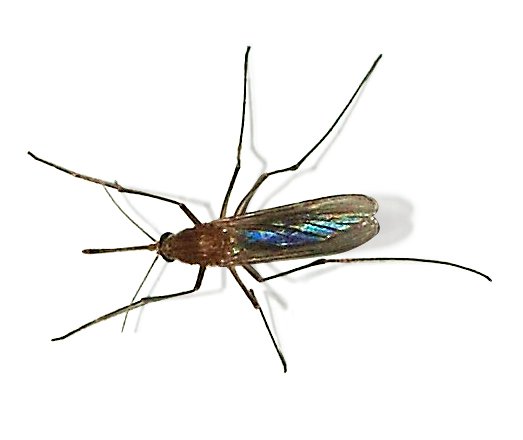
Tennessee is home to many mosquito species. Three matter most for the average resident.
Eastern treehole mosquito (Aedes triseriatus). This is the main vector of La Crosse virus. It is a woodland mosquito that lays its eggs in water held in natural tree holes and, increasingly, in artificial containers such as discarded tires, buckets, and toys left in shaded yards (Sources 3, 7). The mosquito picks up the virus from small forest mammals like chipmunks and squirrels, and it can pass the virus to its own eggs, so infected mosquitoes can emerge the following year from eggs that overwintered in a tree hole or container (Source 3). Because these mosquitoes breed close to where children play, backyards and wood edges are where most exposure happens (Source 7). Learn more on the Aedes triseriatus species page.
Asian tiger mosquito (Aedes albopictus). This invasive daytime biter is the mosquito most people swat in their own yards across the state. It shares the same container-breeding habits as the treehole mosquito, and it is a suspected accessory vector of La Crosse virus: La Crosse virus has been isolated from naturally infected Aedes albopictus in the field, and laboratory work confirms the species can transmit the virus (Sources 7, 9). See the Aedes albopictus species page.
Southern house mosquito (Culex quinquefasciatus). Culex mosquitoes are the primary carriers of West Nile virus in Tennessee. They are most active from dusk into the night and breed in stagnant, organically rich water such as clogged drains, ditches, and neglected containers (Source 5). Read more on the Culex quinquefasciatus species page.
Disease risk
La Crosse encephalitis. La Crosse virus is the most common cause of mosquito-borne brain infection in children in the country, and Tennessee is one of its main hotspots (Sources 7, 10). Initial symptoms include fever, headache, nausea, vomiting, and fatigue; in severe cases the virus causes encephalitis, seizures, coma, or paralysis, and this severe disease most often occurs in children under the age of 16 (Sources 4, 6). The burden falls sharply on the east: a study of eastern Tennessee and western North Carolina counted 192 confirmed and probable cases in Tennessee from 2003 through 2020, with 87 percent of all cases in people 19 or younger, and it found that about half of pediatric cases came from a handful of persistent high-risk clusters that reappear in the same places year after year (Source 7). The pattern continues to the present: in 2024, nine of the nineteen La Crosse neuroinvasive disease cases reported nationally by mid-September were in East Tennessee, in Knox, Sevier, and Union counties (Source 8). Nationally the CDC records an average of roughly 68 neuroinvasive cases a year, and in 2025 Ohio and Tennessee reported the highest case counts of any states (Sources 2, 10). There is no vaccine and no specific antiviral treatment, so preventing bites is the practical defense (Source 6). More on the La Crosse encephalitis page.
West Nile virus. West Nile is Tennessee’s statewide mosquito-borne disease. It spreads through the bite of infected Culex mosquitoes, primarily in summer and early fall, and the Tennessee Department of Health tracks it through mosquito trapping and testing each year (Sources 5, 6). Most people infected have no symptoms; about 20 percent develop a fever with headache, body aches, joint pain, vomiting, or rash; and fewer than 1 percent develop severe neuroinvasive disease such as meningitis or encephalitis (Source 5). Adults over 60 and people with weakened immune systems face the highest risk of serious illness (Source 5). There is no vaccine for West Nile either (Source 5). See the West Nile virus page.
Local control
Organized mosquito control in Tennessee is limited and uneven. The state’s Vector-Borne Diseases Program focuses on surveillance, education, and outreach rather than sweeping treatment, and routine mosquito trapping is concentrated in a few of the larger counties, such as Davidson (Nashville), Shelby (Memphis), and Knox (Sources 5, 6). Most of the state has little or no organized spraying program, and for La Crosse in particular the public-health emphasis is on education and source reduction: because the disease has no cure, the recommended defense is reducing mosquito habitat and preventing bites in the first place (Source 6). That places most of the practical control burden on households and neighborhoods, especially in the wooded eastern counties where the treehole mosquito breeds close to homes (Source 7).
Protect yourself
- Empty tree holes and containers. Fill or drain water-holding tree holes near the house, and empty or discard containers that collect water, including tires, buckets, toys, planter trays, and tarps. This is the single most important step against the treehole mosquito that spreads La Crosse (Sources 6, 7, 11).
- Remove standing water weekly. Change birdbath and pet-bowl water regularly and keep gutters clear so Culex mosquitoes cannot breed in stagnant water (Sources 5, 11).
- Use an EPA-registered repellent. Products with DEET, picaridin, IR3535, or oil of lemon eucalyptus are effective; apply before going outside (Source 5).
- Cover up. Wear long sleeves and long pants, especially for children playing in or near wooded yards during the day, when the treehole and tiger mosquitoes bite (Sources 5, 6).
- Keep mosquitoes out of the house. Install or repair window and door screens (Source 5).
Sources
- CDC, “La Crosse Virus: Historic Data (2003-2025).” Tennessee among the most affected states, with more than 200 reported cases from 2003 to 2024, and the large majority of cases in children. https://www.cdc.gov/la-crosse-encephalitis/data-maps/historic-data.html (accessed 20 July 2026; page returned HTTP 403, facts drawn from the search result summary of this page).
- CDC, “La Crosse Virus: Current Year Data (2026).” In 2025, 106 total human cases were reported across 13 states, with Ohio and Tennessee reporting the highest case counts. https://www.cdc.gov/la-crosse-encephalitis/data-maps/current-year-data.html (accessed 20 July 2026; page returned HTTP 403, facts drawn from the search result summary of this page).
- CDC, “Transmission of La Crosse Virus.” Aedes triseriatus as the primary vector, virus acquired from small mammals such as chipmunks and squirrels, transovarial (egg) transmission, and Aedes albopictus and Aedes japonicus as potential vectors. https://www.cdc.gov/la-crosse-encephalitis/php/transmission/index.html (accessed 20 July 2026; page returned HTTP 403, facts drawn from the search result summary of this page).
- Tennessee Department of Health, “California Serogroup / La Crosse Encephalitis.” Initial symptoms of fever, headache, nausea, vomiting, and fatigue; severe encephalitis, seizures, coma, and paralysis occurring most often in children under the age of 16. https://www.tn.gov/health/rpd/california-serogroup-lacrosse-encephalitis.html (accessed 20 July 2026).
- Tennessee Department of Health, “West Nile Virus.” Transmission by infected Culex mosquitoes in summer and early fall, roughly 20 percent of infections causing febrile illness, fewer than 1 percent neuroinvasive, higher risk for adults over 60, no vaccine, and prevention guidance. https://www.tn.gov/health/rpd/west-nile-virus.html (accessed 20 July 2026).
- University of Tennessee, MEGA:BITESS Academy, “About Mosquito-borne Disease.” Each summer in East Tennessee mosquitoes transmit La Crosse virus, infections primarily in children under 16, no preventive treatment or cure, and prevention through habitat reduction and repellents. https://megabitess.tennessee.edu/about-mosquitos/ (accessed 20 July 2026).
- Day, C.A., and others, “Persistent spatial clustering and predictors of pediatric La Crosse virus neuroinvasive disease risk in eastern Tennessee and western North Carolina, 2003-2020.” 192 Tennessee cases, 87 percent of cases in people 19 or younger, persistent high-risk clusters (including the Knox, Sevier, and Union counties area), climate predictors (August temperature and rainfall), Aedes triseriatus as principal vector with accessory transmission by Ae. albopictus and Ae. japonicus, and tree hole and container habitat. https://pmc.ncbi.nlm.nih.gov/articles/PMC11156276/ (accessed 20 July 2026).
- University of Tennessee Extension (Environmental and Public Health), “Increased Number of LaCrosse Neuroinvasive Disease in Eastern Tennessee” (September 2024). Nine of the nineteen La Crosse neuroinvasive disease cases reported nationally as of mid-September 2024 occurred in East Tennessee, in Knox, Sevier, and Union counties. https://epp.tennessee.edu/wp-content/uploads/sites/267/2024/09/2024-09-LaCrosse-V5I9.pdf (accessed 20 July 2026).
- Gerhardt, R.R., and others, “First Isolation of La Crosse Virus from Naturally Infected Aedes albopictus.” Documents recovery of La Crosse virus from field-collected Aedes albopictus, evidence that the invasive species can carry the virus in nature. https://www.ncbi.nlm.nih.gov/pmc/articles/PMC2631884/ (accessed 20 July 2026).
- StatPearls (NCBI Bookshelf), “La Crosse Encephalitis.” La Crosse virus as the most common cause of pediatric arboviral encephalitis in the country, with an average of about 68 reported neuroinvasive cases per year for 2009 to 2018 per CDC data. https://www.ncbi.nlm.nih.gov/books/NBK562248/ (accessed 20 July 2026).
- University of Tennessee Extension, “SP503-B: Mosquito Control Around Homes.” Warm-season mosquito activity, standing water in man-made containers as a leading source of residential mosquito problems, and source-reduction and personal-protection guidance. https://utia.tennessee.edu/publications/wp-content/uploads/sites/269/2023/10/SP503-B.pdf (accessed 20 July 2026).
Related
- Aedes triseriatus (eastern treehole mosquito)
- Aedes albopictus (Asian tiger mosquito)
- Culex quinquefasciatus (southern house mosquito)
- La Crosse encephalitis
- West Nile virus
- Mosquito repellents that work
This guide is for general education and is not medical advice. If you have symptoms you are worried about, contact a healthcare provider or your county health department.
Last reviewed 20 July 2026.