Short answer
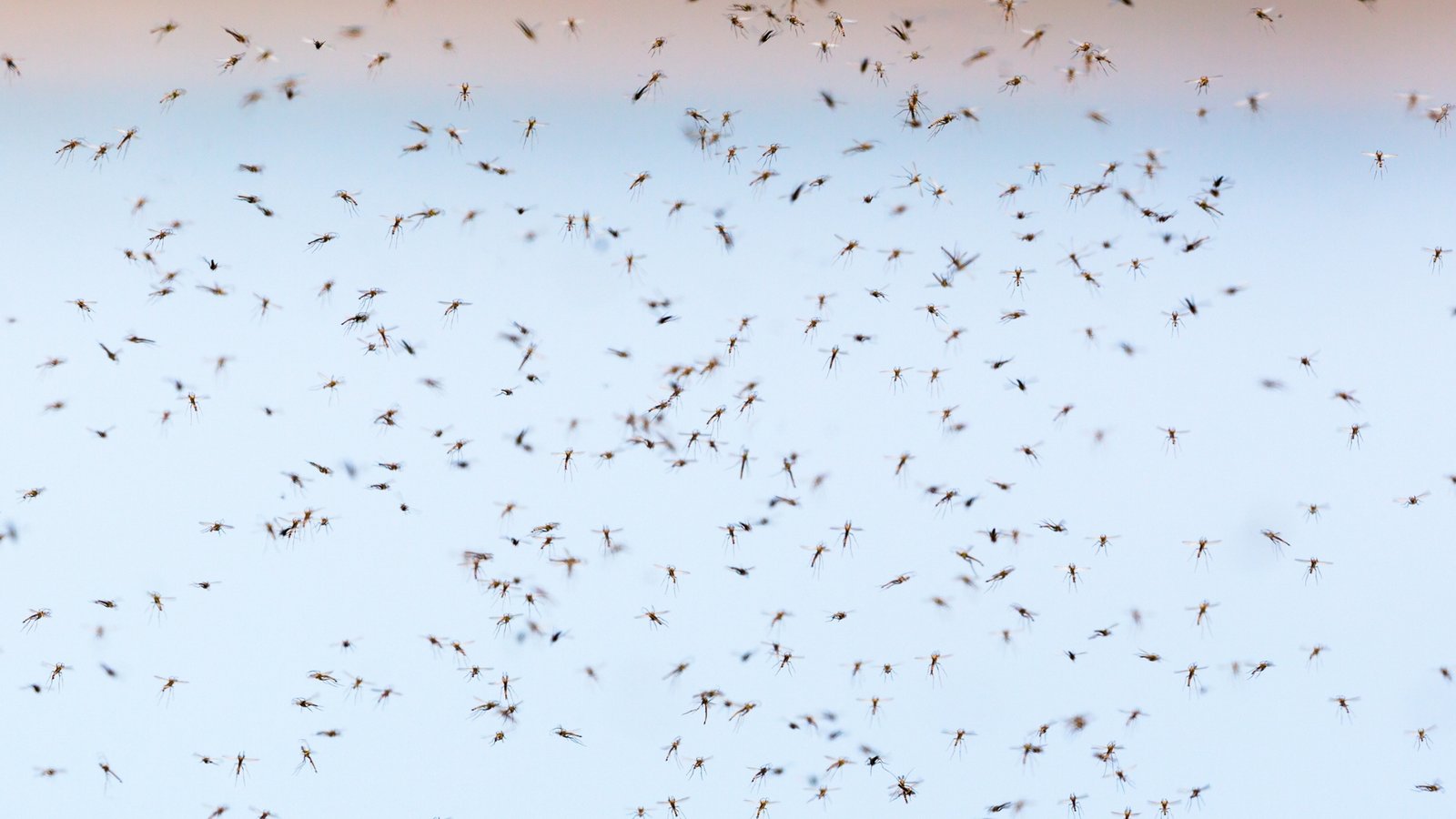
Louisiana is one of the most mosquito-intense places in the country. Its warm, humid, low-lying landscape, laced with bayous, swamps, rice fields, coastal marsh, and frequent heavy rain, produces large mosquito broods and a long season that runs across most of the year. The state also carries a heavy public health burden from West Nile virus, which is considered endemic to all parts of Louisiana (Louisiana Department of Health, West Nile Virus). In recent years Louisiana has repeatedly ranked among the states with the highest rates of West Nile neuroinvasive disease, the severe form that affects the brain and spinal cord. If you live in or travel to Louisiana, expect mosquitoes for much of the year and take bite prevention seriously.
Mosquito season
Louisiana does not have a short, well-defined mosquito season the way colder states do. The climate is humid subtropical, so mosquitoes stay active across most of the year, with activity easing only during brief cold snaps in winter. Warmth, humidity, and abundant standing water let larvae develop for many months at a stretch.
Activity and disease risk climb through late spring and peak in the hot, wet months of summer and early fall. Louisiana’s West Nile activity tends to concentrate in mid-to-late summer: in the 2005 season, for example, the highest reported incidence of West Nile neuroinvasive disease occurred in the second week of August (Caillouet et al., Emerging Infectious Diseases). Heavy summer thunderstorms, tropical storms, and hurricanes can trigger sudden floodwater broods on top of the baseline season. Because the season is so long, prevention in Louisiana is closer to a year-round habit than a summer-only concern.
The mosquitoes you meet
Louisiana has a large mosquito fauna. A handful of groups matter most for people. For a full breakdown of genera and species, see the linked species pages.
- Culex quinquefasciatus (the southern house mosquito). A nighttime biter that breeds in stagnant, often polluted water such as roadside and septic ditches, sewage oxidation ponds, catch basins, and stormwater pump stations. It is the primary vector of West Nile virus in Louisiana, and also transmits St. Louis encephalitis virus and dog heartworm (West Baton Rouge Parish, Important Mosquito Species; CDC, Emerging Infectious Diseases).
- Saltmarsh and floodwater Aedes. Saltmarsh species such as Aedes sollicitans breed in coastal marshes and can fly well inland in large numbers. Aedes vexans, the inland floodwater mosquito, breeds after heavy rain and flooding, delivers a painful bite, and can travel long distances from where it emerged (LSU AgCenter, Mosquitoes; West Baton Rouge Parish, Important Mosquito Species). Aedes albopictus, the Asian tiger mosquito, is a day-active container breeder common around homes.
- Psorophora, including the gallinipper. These are large, aggressive floodwater mosquitoes. Psorophora columbiae, the dark rice field mosquito, is a fierce biter active day or night, a strong flier, and surges after hurricanes and tropical storms (West Baton Rouge Parish, Important Mosquito Species). Psorophora ciliata, the gallinipper, is the largest blood-feeding mosquito in the country and inflicts a painful bite; its eggs lie dormant in soil and hatch in large numbers after flooding (Galveston County Mosquito Control District).
- Post-hurricane surges. After major storms and flooding, dormant floodwater eggs hatch at once, producing enormous nuisance broods of Psorophora and floodwater Aedes within one to two weeks. These are primarily aggressive nuisance biters rather than the main disease vectors.
Disease risk
West Nile virus is the leading mosquito-borne disease concern in Louisiana, and the state’s cases skew heavily toward the severe neuroinvasive form.
West Nile virus. Nationally, West Nile remains the leading cause of arboviral disease in the continental U.S. (CDC, MMWR, 2023). Louisiana has long been a hot spot: during 1999 to 2008 it was among the states with an average annual incidence of West Nile neuroinvasive disease of at least 1 case per 100,000 population (CDC, MMWR Surveillance Summaries). The burden has continued in recent seasons. In 2022, Louisiana reported 33 neuroinvasive disease cases plus 3 West Nile fever cases and 5 deaths, with 914 mosquito pools testing positive, and preliminary CDC data ranked the state fourth-highest in the country for the rate of West Nile neuroinvasive disease (Louisiana Department of Health, news release, 21 September 2022). In 2023 the state recorded 65 West Nile cases, including 46 neuroinvasive disease cases and 4 deaths (Louisiana Department of Health, news release). The high share of neuroinvasive cases is notable because most infections cause no symptoms at all: the health department estimates about 80 percent of human infections are asymptomatic, roughly 20 percent cause West Nile fever, and only a small percentage progress to neuroinvasive disease (Louisiana Department of Health, West Nile Virus). People 55 and older and those with certain medical conditions are at greater risk of severe illness.
Contrary to what many expect, major hurricanes have not reliably increased West Nile disease. After Hurricane Katrina in 2005, the hardest-hit coastal parishes actually reported some of the fewest post-storm neuroinvasive cases, and the season’s peak came before landfall (Caillouet et al., Emerging Infectious Diseases). Storms drive up nuisance biting far more than they drive up documented West Nile transmission.
For details on these illnesses, see the linked disease pages in the Related section.
Local control
Mosquito control in Louisiana is delivered mainly by parish and local mosquito abatement districts, which run larval surveillance, source reduction, larviciding, and adult control by truck and aircraft. Districts commonly use landing rate counts and mosquito trapping to decide when and where to treat (LSU AgCenter, Mosquitoes). Truck-mounted spraying typically runs in the evening when target mosquitoes are most active.
Storm response is a distinct part of the job. After large hurricanes and floods, state and local agencies coordinate large-scale aerial spraying to knock down the floodwater broods that follow. During the Hurricane Katrina response in 2005, aerial application of the adulticide naled began over the Greater New Orleans area and later expanded to other affected parishes, with U.S. Air Force aircraft assisting on later Gulf storms (Louisiana Department of Health, Hurricane Katrina spraying news releases). In 2021, contractors aerially treated more than 3 million acres in Louisiana to control mosquitoes tied to floodwaters and other emergencies (Louisiana Department of Health, news release).
Protect yourself
Because Louisiana’s season is long and its West Nile burden is real, prevention is worth building into daily habits during the warm months:
- Use an EPA-registered repellent (DEET, picaridin, IR3535, or oil of lemon eucalyptus) and follow the label.
- Wear loose, long sleeves and pants when mosquitoes are active, and treat clothing or gear with permethrin (not on skin).
- Be especially careful at dusk, night, and dawn, when Culex quinquefasciatus (the main West Nile vector) is biting.
- Dump and drain standing water around your home at least weekly: containers, plant saucers, tarps, buckets, clogged gutters, tires, and boat covers.
- Keep window and door screens in good repair, and check seals around window air conditioning units.
- After storms and flooding, expect a surge in biting and step up repellent use and drainage.
- If you develop fever, severe headache, stiff neck, confusion, or muscle weakness after mosquito exposure, contact a clinician and mention possible mosquito-borne illness.
Sources
- Louisiana Department of Health, West Nile Virus (WNV endemic to all parts of Louisiana; surveillance initiated spring 2000; roughly 20 percent develop West Nile fever and a small percentage develop neuroinvasive disease; people 55 and older at greater risk). https://ldh.la.gov/bureau-of-infectious-diseases/west-nile-virus (accessed 20 July 2026)
- Louisiana Department of Health, news release (2023 season: 65 West Nile cases including 46 neuroinvasive disease cases and 4 deaths; about 80 percent of human cases asymptomatic; 2024 Franklin Parish cluster). https://ldh.la.gov/news/7355 (accessed 20 July 2026)
- Louisiana Department of Health, news release, 21 September 2022 (2022 season: 33 neuroinvasive disease cases, 3 West Nile fever cases, 5 deaths, 914 positive mosquito pools; fourth-highest rate of West Nile neuroinvasive disease in the country per preliminary CDC data; Northshore concentration). https://ldh.la.gov/news/6774 (accessed 20 July 2026)
- Centers for Disease Control and Prevention, MMWR, “West Nile Virus and Other Nationally Notifiable Arboviral Diseases, United States, 2023” (West Nile remained the leading cause of arboviral disease in the continental U.S.). https://www.cdc.gov/mmwr/volumes/74/wr/mm7421a1.htm (accessed 20 July 2026; page returned HTTP 403, national finding drawn from the search-result summary of this CDC report)
- Centers for Disease Control and Prevention, MMWR Surveillance Summaries, “Surveillance for Human West Nile Virus Disease, United States, 1999 to 2008” (Louisiana among states with average annual neuroinvasive disease incidence of at least 1 per 100,000). https://www.cdc.gov/mmwr/preview/mmWrhtml/ss5902a1.htm (accessed 20 July 2026)
- Caillouet, K.A., et al., “Effect of Hurricane Katrina on Arboviral Disease Transmission,” Emerging Infectious Diseases (highest neuroinvasive incidence occurred before Katrina landfall; hardest-hit coastal parishes had fewest post-hurricane cases). https://pmc.ncbi.nlm.nih.gov/articles/PMC2828079/ (accessed 20 July 2026)
- West Baton Rouge Parish, Important Mosquito Species (Culex quinquefasciatus as primary West Nile vector and its breeding sites; Psorophora columbiae as a fierce biter that surges after hurricanes; Aedes vexans floodwater biting; Aedes albopictus container breeding). https://www.westbatonrougemuseum.org/246/Important-Mosquito-Species (accessed 20 July 2026)
- LSU AgCenter, Mosquitoes / Mosquito Information (Louisiana mosquito species including Aedes vexans, the inland floodwater mosquito; landing rate counts used in control). https://www.lsuagcenter.com/topics/environment/insects/mosquitoes (accessed 20 July 2026)
- Centers for Disease Control and Prevention, Emerging Infectious Diseases, “West Nile Virus, infected Mosquitoes, Louisiana, 2002” (Culex quinquefasciatus as the primary epizootic and epidemic West Nile vector in Louisiana). https://wwwnc.cdc.gov/eid/article/11/9/04-0443_article (accessed 20 July 2026)
- Galveston County Mosquito Control District, Psorophora ciliata (the gallinipper as the largest blood-feeding mosquito, painful bite, floodwater eggs hatching after flooding). https://www.galvestoncountytx.gov/county-offices/mosquito-control/common-mosquitoes-of-galveston-county/psorophora-ciliata (accessed 20 July 2026)
- Louisiana Department of Health, Hurricane Katrina mosquito spraying news releases (aerial naled application over Greater New Orleans and affected parishes; U.S. Air Force assistance; large-scale aerial acreage treated). https://ldh.la.gov/index.cfm/newsroom/detail/992 (accessed 20 July 2026)
Related
- Species: Culex quinquefasciatus (southern house mosquito) [placeholder]
- Species: Aedes sollicitans (eastern saltmarsh mosquito) [placeholder]
- Species: Aedes vexans (inland floodwater mosquito) [placeholder]
- Species: Aedes albopictus (Asian tiger mosquito) [placeholder]
- Species: Psorophora columbiae (dark rice field mosquito) [placeholder]
- Species: Psorophora ciliata (gallinipper) [placeholder]
- Disease: West Nile virus [placeholder]
- Disease: St. Louis encephalitis [placeholder]
- Full Louisiana species list [placeholder]
Educational note: This page is a general reference and is not medical advice. For diagnosis, treatment, or travel health guidance, consult a licensed clinician or your local health department. For local mosquito control questions, contact your parish or district mosquito abatement program.
Last reviewed 20 July 2026.