Short answer
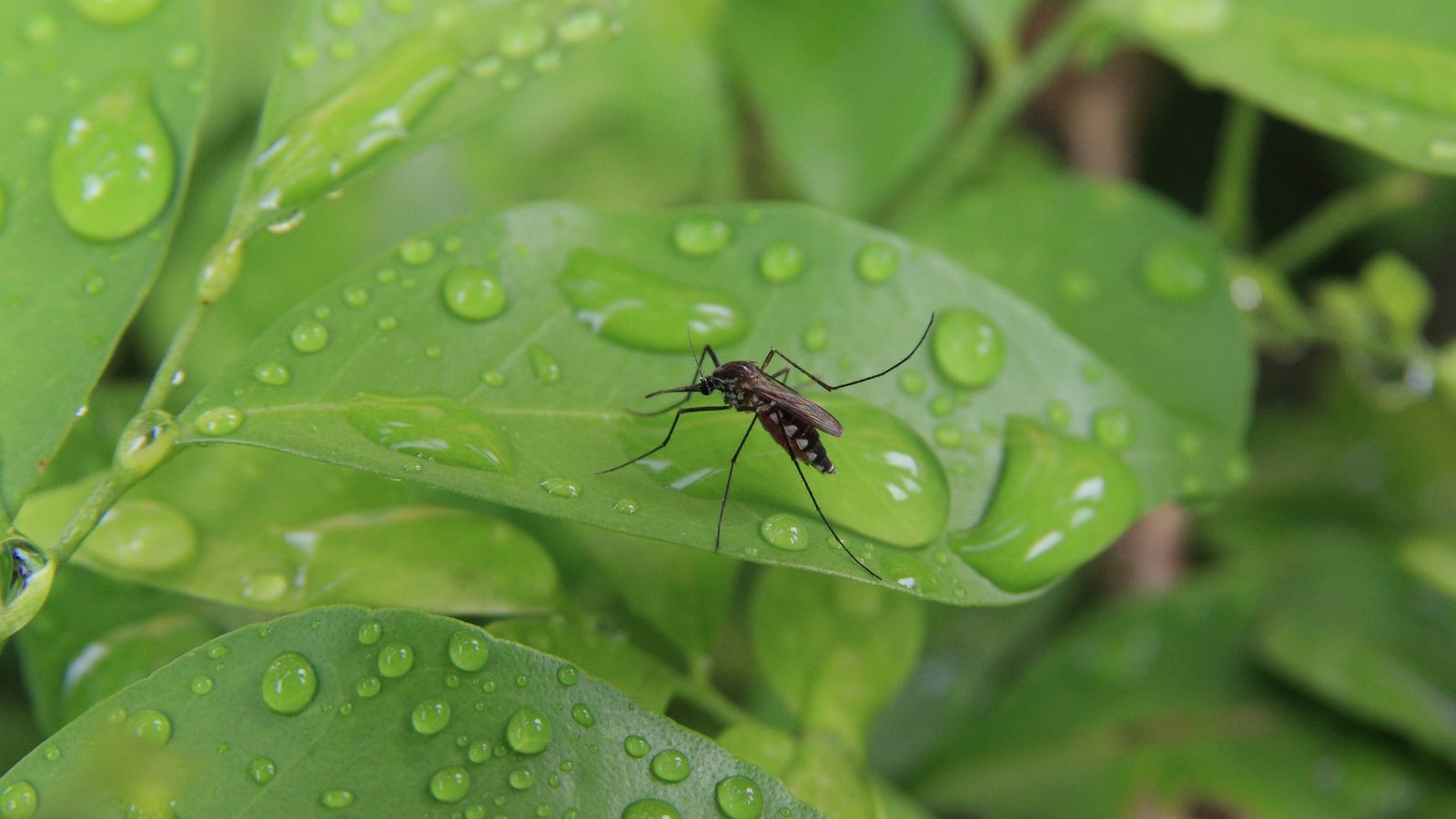
Florida is one of the most mosquito-active places in the country. Its warm, wet, low-lying geography supports a year-round mosquito season, dozens of established species, and a long-standing network of well-funded local mosquito control districts. Florida also carries a distinct public health burden: in recent years it has reported more locally acquired dengue than any other state (UF Emerging Pathogens Institute; Florida Department of Health). If you live in or travel to Florida, expect to encounter mosquitoes in every month of the year and to take bite prevention seriously.
Mosquito season
Florida does not have a clean start-and-stop mosquito season the way colder states do. The climate is subtropical across most of the peninsula and tropical at the southern tip, so mosquitoes remain active in every month. The Florida Department of Health tracks mosquito-borne disease year-round, publishing arbovirus surveillance reports beginning in the first week of January and continuing through the year (Florida Department of Health, Arbovirus Surveillance).
Activity is lowest in the cooler, drier winter months and highest during the summer rainy season, roughly June through October, when heat, humidity, and frequent rain create abundant standing water for larvae. Floodwater and saltmarsh species can surge in large numbers after heavy rain and high tides. Because the season never fully closes, prevention in Florida is a year-round habit rather than a summer-only concern.
The mosquitoes you meet
Florida has a large and growing mosquito fauna. UF/IFAS mosquito biologists put the figure at about 90 species living in the state, and that number keeps rising as new species arrive from the tropics; roughly 17 of those are non-native, introduced species, and several were first detected only in the past two decades (UF/IFAS, Florida Medical Entomology Laboratory). For a full breakdown of genera and species, see the species section below.
A few groups matter most for people:
- Aedes aegypti (the yellow fever mosquito) and Aedes albopictus (the Asian tiger mosquito). These container-breeding, day-active mosquitoes live in and around homes and are the vectors of concern for dengue, Zika, and chikungunya. Aedes aegypti is the primary driver of local dengue transmission in Florida (UF Emerging Pathogens Institute).
- Saltmarsh Aedes (such as Aedes taeniorhynchus and Aedes sollicitans). These are the aggressive biters that emerge in enormous numbers from coastal marshes after rain and high tides. They are the historic reason Florida built organized mosquito control in the first place.
- Culex species. Nighttime biters that breed in stagnant, polluted water. They are the main vectors of West Nile virus and St. Louis encephalitis virus.
- Psorophora species. Large floodwater mosquitoes, including notably large and painful biters, that appear after heavy summer rains.
Disease risk
Florida faces a broader set of mosquito-borne disease risks than most states, spanning both introduced tropical viruses and long-established local ones.
Dengue. Florida has recorded locally acquired dengue in recent years, meaning transmission by local mosquitoes rather than infection acquired while traveling. In 2024 the state reported 87 locally acquired dengue cases across ten counties, and about 1,044 total dengue cases counting travel-associated infections, the most of any state in the continental U.S. (UF Emerging Pathogens Institute; Florida Department of Health). Local transmission continued into 2025, with the first locally acquired case reported in Miami-Dade County (Florida Department of Health, Arbovirus Surveillance).
Zika. In 2016 Florida was the site of the first recognized local mosquito-borne Zika virus transmission in the continental U.S., centered on neighborhoods in Miami-Dade County (including Wynwood) and Broward County. The outbreak was brought under control through intensive mosquito control operations (CDC, MMWR, 2016).
West Nile virus, Eastern equine encephalitis, and St. Louis encephalitis. These three arboviruses are endemic to Florida and circulate mainly in bird-and-mosquito cycles, occasionally spilling over to people and horses. The state monitors them through year-round surveillance, including sentinel networks, and reports detections most years (Florida Department of Health, Arbovirus Surveillance). Eastern equine encephalitis is rare in humans but among the most severe of the mosquito-borne encephalitides.
For details on any of these, see the linked disease pages in the Related section.
Local control
Florida has one of the oldest and best-organized mosquito control systems in the country. Control is delivered largely through independent mosquito control districts, many of them created decades ago to fight the coastal saltmarsh swarms that once made parts of the state nearly unlivable in summer. As of a 2021 review there were dozens of state-approved mosquito control programs operating across Florida (Franklin, C.G., et al., in PMC; OPPAGA, Florida Keys Mosquito Control District Review, 2023).
These districts are notably well resourced compared with programs in many other states. Coastal districts in particular run large budgets: the program covering Monroe County (the Florida Keys) spends on the order of 20 million dollars a year on mosquito control (Florida Mosquito Control survey, in PMC). District work includes larval surveillance, source reduction, larviciding, targeted adulticiding by truck and aircraft, and rapid response around confirmed disease cases, as seen in the 2016 Zika response.
Protect yourself
Because Florida’s season runs year-round, prevention is a continuous habit:
- Use an EPA-registered repellent (DEET, picaridin, IR3535, or oil of lemon eucalyptus) and follow the label.
- Wear loose, long sleeves and pants when mosquitoes are active, and treat clothing or gear with permethrin (not on skin).
- Dump and drain standing water around your home at least weekly: containers, plant saucers, tarps, buckets, clogged gutters, and boat covers. Aedes aegypti breeds in very small amounts of water close to homes.
- Keep window and door screens in good repair.
- Remember that Aedes aegypti and albopictus bite during the day, so daytime precautions matter, not just dawn and dusk.
- If you develop fever, rash, joint pain, or severe headache after mosquito exposure, contact a clinician and mention possible mosquito-borne illness.
Sources
- Florida Department of Health, Arbovirus Surveillance (weekly and annual mosquito-borne disease surveillance reports for Florida, including dengue, West Nile, EEE, and St. Louis encephalitis). https://www.floridahealth.gov/statistics-data/population-surveillance/arbovirus-surveillance/ (accessed 20 July 2026)
- University of Florida Emerging Pathogens Institute, “Dengue in Florida: What to know,” 24 June 2025 (2024 case totals, comparison with other states, Aedes aegypti as vector, 2025 local case). https://epi.ufl.edu/2025/06/24/dengue-in-florida-what-to-know/ (accessed 20 July 2026)
- Centers for Disease Control and Prevention, MMWR, “Local Mosquito-Borne Transmission of Zika Virus, Miami-Dade and Broward Counties, Florida, June to August 2016” (first recognized local Zika transmission in the continental U.S.). https://www.cdc.gov/mmwr/volumes/65/wr/mm6538e1.htm (accessed 20 July 2026)
- UF/IFAS News / University of Florida, “New mosquito species reported in Florida,” March 2023 (about 90 species in Florida, roughly 17 non-native, rising rate of introductions; Lawrence Reeves, Florida Medical Entomology Laboratory). https://news.ufl.edu/2023/03/new-mosquito-species/ (accessed 20 July 2026)
- UF/IFAS Florida Medical Entomology Laboratory, Mosquito Guide, Genera and Species (list of Florida mosquito genera). https://fmel.ifas.ufl.edu/mosquito-guide/mosquito-genera-and-species/ (accessed 20 July 2026)
- OPPAGA (Florida Legislature Office of Program Policy Analysis and Government Accountability), “Florida Keys Mosquito Control District Review, Final Report,” September 2023 (structure and operations of a Florida mosquito control district). https://oppaga.fl.gov/Documents/ContractedReviews/Florida%20Keys%20MCD%20Final%20Report.pdf (accessed 20 July 2026)
- “Majority of Florida mosquito species are understudied,” UF/IFAS survey summary, and associated Florida mosquito control program data in PMC (number of state-approved mosquito control programs; district budgets including Monroe County). https://blogs.ifas.ufl.edu/news/2021/08/11/majority-of-florida-mosquito-species-are-understudied-uf-ifas-survey-illustrates/ (accessed 20 July 2026)
Related
- Species: Aedes aegypti (yellow fever mosquito) [placeholder]
- Species: Aedes albopictus (Asian tiger mosquito) [placeholder]
- Species: Culex mosquitoes [placeholder]
- Disease: Dengue [placeholder]
- Disease: Zika [placeholder]
- Disease: West Nile virus [placeholder]
- Disease: Eastern equine encephalitis [placeholder]
- Disease: St. Louis encephalitis [placeholder]
- Full Florida species list [placeholder]
Educational note: This page is a general reference and is not medical advice. For diagnosis, treatment, or travel health guidance, consult a licensed clinician or your local health department. For local mosquito control questions, contact your county or district mosquito control program.
Last reviewed 20 July 2026.