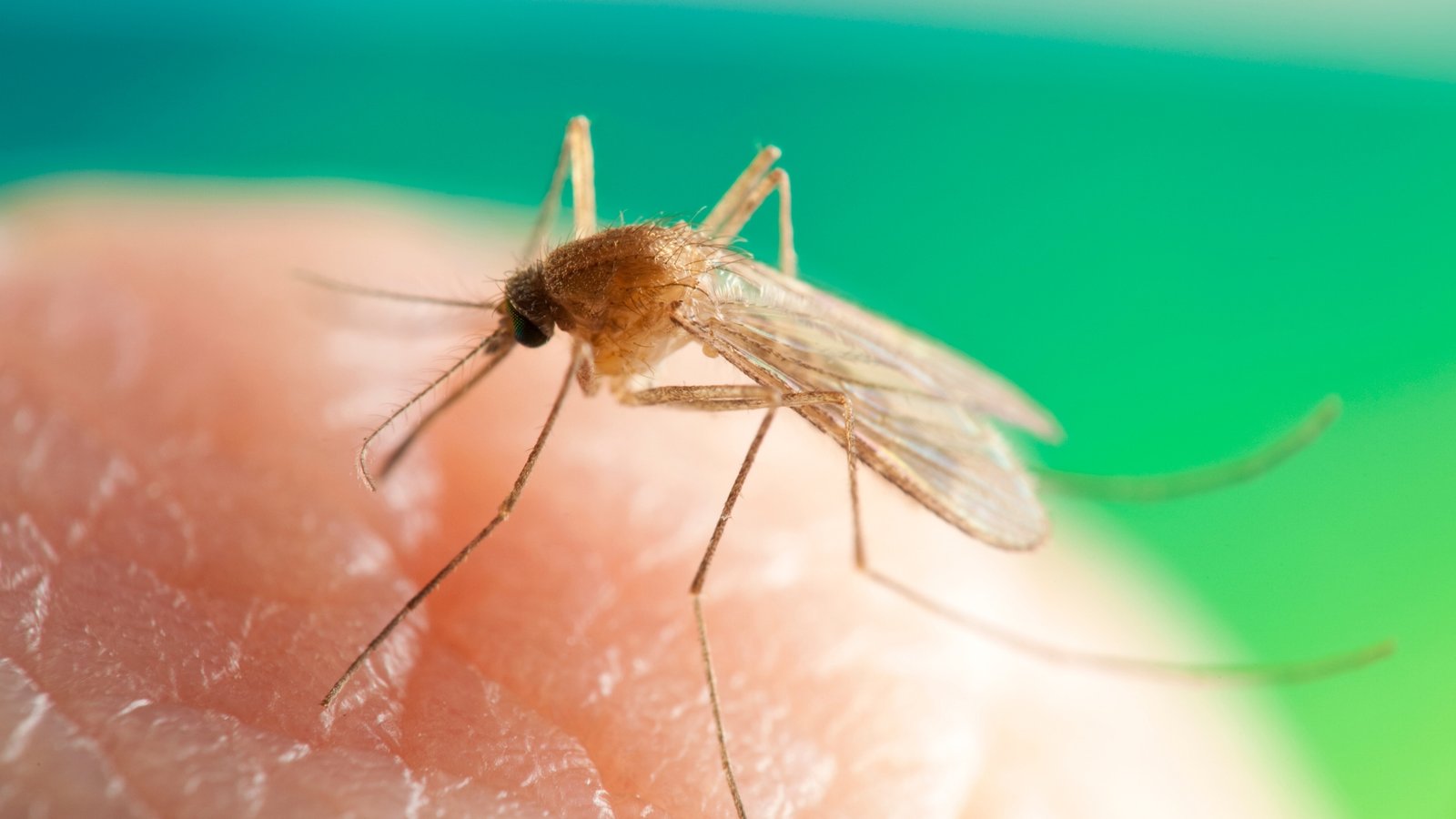
The short answer
Even the desert has mosquitoes. Dry heat keeps numbers lower than in the wet Southeast, but it does not clear them out. Summer monsoon rains, year-round irrigation, backyard pools, and the standing water of large desert cities give mosquitoes everything they need to breed.
The main disease concern here is West Nile virus, carried by Culex mosquitoes. Maricopa County, Arizona (metro Phoenix) recorded the largest documented outbreak of West Nile virus in a single US county in 2021 (CDC MMWR, Kretschmer et al., 2023). On top of that, the invasive mosquito Aedes aegypti has spread into desert cities including Phoenix, Tempe, and Tucson, and in late 2022 Maricopa County confirmed its first locally acquired dengue cases (CDC MMWR, 2023). So the picture in the Southwest is two-sided: a serious, established West Nile risk, plus a smaller but growing local dengue potential.
Mosquito season here
In the low deserts, mosquito season is long. Warm temperatures let mosquitoes stay active across much of the year rather than shutting down for a hard winter the way they do farther north.
The season is boosted by the North American monsoon, the surge of summer thunderstorms that typically builds through July and August. In 2021, an unusually wet monsoon dropped about 6.6 inches of rain on the Phoenix area from June through September, compared with a historical average near 2.2 inches, and the rain fell across many days rather than in a few bursts (NOAA Climate.gov, 2023). That steady moisture kept breeding sites full and helped mosquito numbers climb through late summer and into fall. West Nile virus activity in the region usually peaks in this same late-summer to autumn window.
The mosquitoes you meet
Two groups matter most in the desert Southwest.
Culex mosquitoes, often called house mosquitoes, are the West Nile virus carriers. They breed readily in the stagnant water of storm drains, retention basins, green pools, and irrigation, and they generally bite from evening into the early morning (Maricopa County, West Nile Virus page). These are the mosquitoes driving the region’s biggest disease risk.
Aedes aegypti is an invasive, day-biting mosquito that has moved into populated areas of southern Arizona, including Tempe and other parts of metro Phoenix and Tucson (Maricopa County, Aedes Aegypti page). It lives close to people, breeding in small backyard containers such as tires, buckets, watering cans, and plant saucers, and it can carry dengue and yellow fever viruses. Its spread is what raises the possibility of local dengue transmission in desert cities.
For more detail on each mosquito, see the linked species pages [link: Culex species], [link: Aedes aegypti species].
Disease risk
West Nile virus is the leading mosquito-borne disease risk in the Southwest. Most people who are infected have no symptoms, but a minority develop serious neuroinvasive illness affecting the brain and nervous system.
The scale of the risk is clear from the 2021 Maricopa County outbreak. Health authorities identified 1,487 human West Nile virus cases that year, of which 956 (about 64 percent) were neuroinvasive, and 101 people (about 7 percent) died. It was the largest documented focal West Nile virus outbreak in a single US county, and most illnesses began during a roughly 12-week stretch from mid-August into early November (CDC MMWR, Kretschmer et al., 2023). A wetter-than-average monsoon that year is one factor investigators have connected to the surge (NOAA Climate.gov, 2023).
Dengue is a smaller but growing concern. For years, Aedes aegypti was established in southern Arizona without confirmed local dengue spread. That changed in November 2022, when Maricopa County reported its first evidence of locally acquired dengue virus infection (CDC MMWR, 2023). It was a small event, but it marks the kind of local transmission that becomes more possible as this invasive mosquito settles into desert cities. Dengue is also endemic just across the border in Sonora, Mexico.
For the full picture on symptoms, testing, and prevention, see the disease pages [link: West Nile virus], [link: dengue].
Local control and what to do
The most useful step in the desert is to remove standing water. Because so much of the region’s mosquito habitat is human-made, small actions around the home make a real difference.
- Empty, drain, or cover anything that holds water: buckets, watering cans, plant saucers, tires, toys, and trash. Even a bottle cap of water can breed mosquitoes (Maricopa County).
- Keep swimming pools maintained and chlorinated. Unmaintained or “green” pools are a major Culex breeding source in desert cities.
- Manage irrigation and yard water so it drains rather than pools.
- Use an EPA-registered insect repellent containing DEET when outdoors, and protect yourself from evening to early morning when Culex mosquitoes bite most (Maricopa County, West Nile Virus page).
The Southwest also has strong public vector control. County programs such as Maricopa County’s set and monitor mosquito traps, test mosquitoes for West Nile virus, and treat breeding areas. Reporting green pools and standing water to your county vector control helps them target treatment where it matters.
Sources
- CDC, Morbidity and Mortality Weekly Report (MMWR), Kretschmer M, et al. “Unprecedented Outbreak of West Nile Virus, Maricopa County, Arizona, 2021.” Published 2023. (Case, neuroinvasive, and death totals for the 2021 outbreak; largest documented focal WNV outbreak in a single US county.) https://www.cdc.gov/mmwr/volumes/72/wr/mm7217a1.htm (accessed 2026-07-20)
- NOAA Climate.gov. “Worst-ever US West Nile virus outbreak potentially linked to a wetter-than-average 2021 Southwest monsoon.” (Monsoon rainfall totals and link to mosquito breeding; Culex quinquefasciatus.) https://www.climate.gov/news-features/features/worst-ever-us-west-nile-virus-outbreak-potentially-linked-wetter-average (accessed 2026-07-20)
- CDC, MMWR. “Notes From the Field: First Evidence of Locally Acquired Dengue Virus Infection, Maricopa County, Arizona, November 2022.” (First locally acquired dengue cases in Maricopa County.) https://www.cdc.gov/mmwr/volumes/72/wr/mm7211a5.htm (accessed 2026-07-20)
- Maricopa County, Arizona. “Aedes Aegypti Mosquitoes.” (Presence of invasive Aedes aegypti in southern Arizona and Tempe; container breeding; dengue and yellow fever.) https://www.maricopa.gov/2028/Aedes-Aegypti-Mosquitoes (accessed 2026-07-20)
- Maricopa County, Arizona. “West Nile Virus.” (Culex as primary vector, biting times, standing water and repellent guidance.) https://www.maricopa.gov/1746/West-Nile-Virus (accessed 2026-07-20)
Related
- [link: Culex species]
- [link: Aedes aegypti species]
- [link: West Nile virus]
- [link: dengue]
- [link: Regions overview]
Educational note: This page is for general information and is not medical advice. If you have symptoms of a mosquito-borne illness, contact a healthcare provider or your local health department.
Last reviewed 20 July 2026.