The short answer
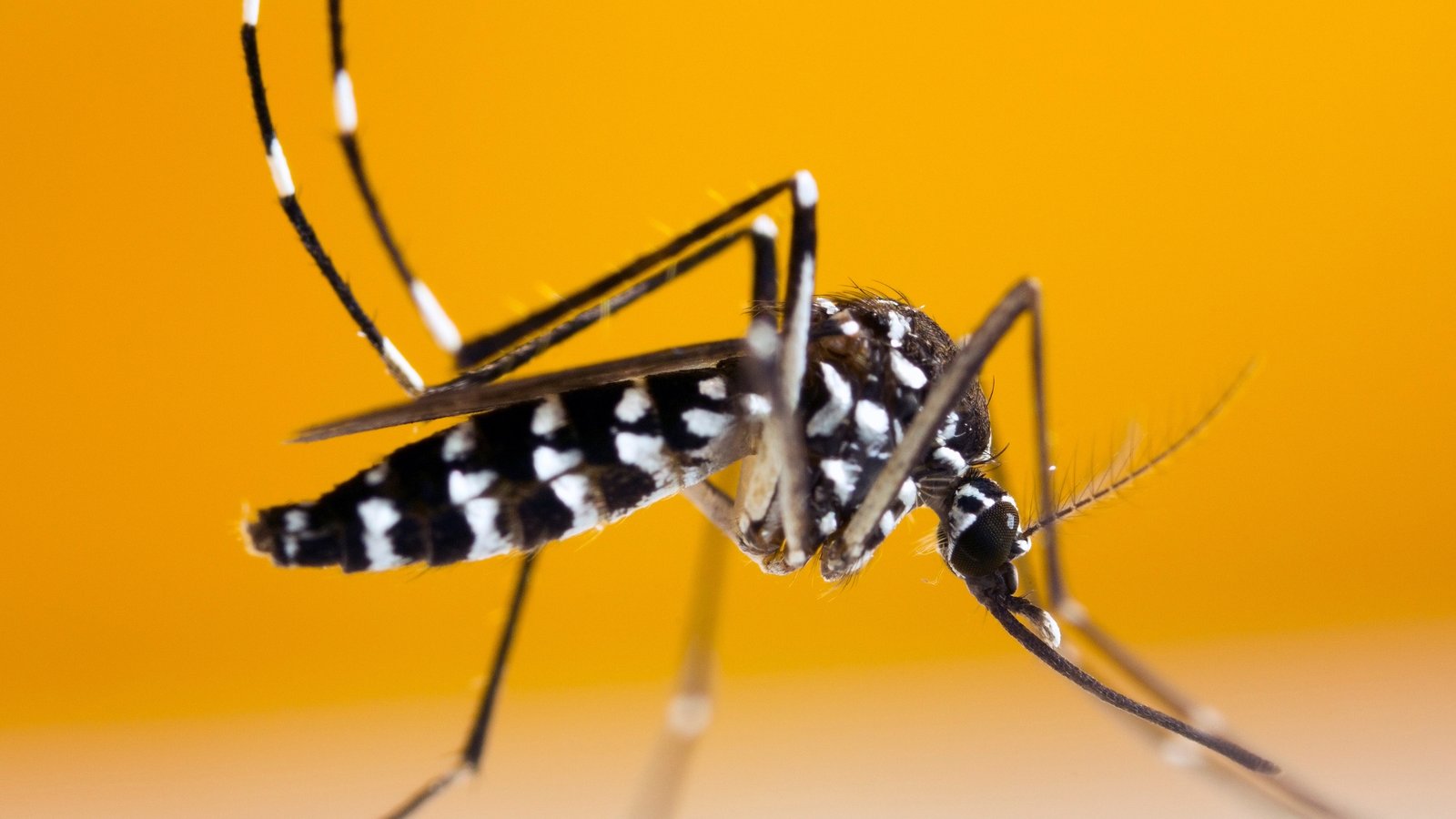
If you live in Virginia, Maryland, Delaware, Pennsylvania, or the District of Columbia, the mosquito you fight in your own yard is almost always the Asian tiger mosquito (Aedes albopictus). It is a small black-and-white container breeder that bites during the day, works its way up from the ankles, and thrives in the region’s warm, humid summers (Maryland Department of Agriculture, source 1). The season is long, roughly late spring through October in most years.
The disease that matters most here is West Nile virus, carried by Culex mosquitoes, not by the tiger mosquito you notice most (Maryland Department of Health, source 2; CDC, source 3). Two other diseases sit lower on the list but are worth knowing: Eastern equine encephalitis (EEE), which is rare but serious near coastal marshes, and La Crosse encephalitis, which shows up in wooded, hilly parts of the region and mainly affects children (Virginia Department of Health, sources 4 and 5). Good yard habits and repellent handle most of the risk.
Mosquito season here
In this region the mosquito calendar runs long. For the Asian tiger mosquito, eggs are present year round, larvae appear in standing water from about April through October, and biting adults are out from roughly May through October, with the heaviest populations from June through September (Maryland Department of Agriculture, source 1). July and August are usually the peak for both biting pressure and disease-carrying Culex activity.
Warm, wet stretches drive the worst weeks. Every rain shower refills the containers that tiger mosquitoes breed in, so populations rebuild fast after a dry spell. Coastal and bayside communities have their own rhythm: saltmarsh mosquitoes can surge after high tides and storm flooding push water into marsh pools from April through October (Vector Disease Control International, source 6).
The mosquitoes you meet
Asian tiger mosquito (Aedes albopictus), your backyard biter. This is the dominant nuisance mosquito across Mid-Atlantic yards. It reached Maryland in 1987 at a Baltimore used-tire facility and has since spread to nearly every county (Maryland Department of Agriculture, source 1). In Henrico County, Virginia, mosquito-control staff rank it the number one nuisance mosquito (Henrico County, source 7). It is an aggressive daytime feeder, most active in early morning and late afternoon, and it favors ankles and knees. It breeds in small, man-made containers holding water: buckets, tires, flowerpot saucers, clogged gutters, toys, and tarps. See our species page for identification and habits (link to species page).
Culex mosquitoes, the West Nile carriers. These are the quieter, dusk-and-night biters that spread West Nile virus. Culex pipiens picks up the virus from infected birds and can pass it to people (Maryland Department of Health, source 2). They breed in stagnant, organically rich water such as storm drains, neglected pools, and standing water in containers. You may barely notice them, but they drive the region’s main disease risk (link to species page).
Saltmarsh mosquitoes near the coast and the bay. Along the Atlantic coast, Delaware Bay, and the Chesapeake, the eastern saltmarsh mosquito (Aedes sollicitans) breeds in tidal marsh pools. It is a fierce daytime biter and a strong flier that can travel well inland from the marsh, so its bites are felt miles from the water (Vector Disease Control International, source 6) (link to species page).
Disease risk
West Nile virus is the leading concern. It is the most consistently reported mosquito-borne illness in the region and nationally (CDC, source 3). Most people who are infected feel nothing: roughly 80 percent have no symptoms, and only a small share develop serious neurologic illness, with risk higher for people over 50 and those with weakened immune systems (Maryland Department of Health, source 2). Case counts vary year to year. Maryland, for example, confirmed 18 human cases in 2024 and announced its first 2025 case in a Central Maryland adult (Maryland Department of Health, source 2). Read more on our West Nile page (link to disease page).
Eastern equine encephalitis (EEE), rare but severe. EEE is uncommon in the Mid-Atlantic but has been recorded in the region, and the virus was first isolated from horses in Delaware, Maryland, New Jersey, and Virginia back in 1933 (CDC, source 8). It circulates between birds and the swamp mosquito Culiseta melanura, with saltmarsh and other bridge-vector mosquitoes able to carry it to people and animals near coastal wetlands (CDC, source 8; Vector Disease Control International, source 6). It is serious: about 30 percent of people who develop severe disease die (CDC, source 8). Learn more on our EEE page (link to disease page).
La Crosse encephalitis in wooded areas. In the forested, hillier parts of the region, La Crosse virus is spread mainly by treehole mosquitoes that lay eggs in water pooled in tree holes, old tires, and buckets (Virginia Department of Health, source 4). It mostly causes serious illness in children under 16 (Virginia Department of Health, source 4). Nationally only about 30 to 90 neuroinvasive cases are reported each year, and roughly 80 percent of them come from the Appalachian region (University of North Carolina, source 5). See our La Crosse page (link to disease page).
Local control and what to do
You can cut most of your risk with two habits: remove standing water and use repellent.
- Tip and toss weekly. Once a week, empty, scrub, cover, or throw out anything that holds water: buckets, tires, toys, birdbaths, flowerpot saucers, tarps, and clogged gutters (CDC, source 9). Because the tiger mosquito breeds in tiny containers, this is the single most effective thing you can do at home.
- Use an EPA-registered repellent. Look for DEET, picaridin, IR3535, oil of lemon eucalyptus (OLE), para-menthane-diol (PMD), or 2-undecanone, and follow the label. Do not use OLE or PMD products on children under 3 (CDC, source 9).
- Cover up and treat gear. Loose long sleeves and pants help, and clothing or gear treated with permethrin adds protection (CDC, source 9).
- Keep water out. Repair window and door screens, and keep pools and rain barrels covered or treated so Culex mosquitoes cannot breed in them.
- Know your local program. Many counties in the region run mosquito-surveillance and control programs. Check with your county or state health department or agriculture department for spraying schedules, marsh management, and how to report a mosquito problem.
Sources
- Maryland Department of Agriculture, “Asian Tiger Mosquito” (state agency page: Aedes albopictus history in Maryland from 1987, county range, daytime biting, container breeding, season). https://mda.maryland.gov/plants-pests/Pages/asian_tiger_mosquito_md.aspx (accessed 2026-07-20)
- Maryland Department of Health, “MDH announces first human case of West Nile virus for 2025” (state health department: Culex transmission, 80 percent asymptomatic, higher risk over 50, 18 Maryland cases in 2024, first 2025 case). https://health.maryland.gov/newsroom/Pages/MDH-announces-first-human-case-of-West-Nile-virus-for-2025.aspx (accessed 2026-07-20)
- CDC, “Historic Data (1999-2025), West Nile Virus” (national surveillance context, West Nile as leading domestic arboviral disease). https://www.cdc.gov/west-nile-virus/data-maps/historic-data.html (accessed 2026-07-20)
- Virginia Department of Health, “La Crosse Encephalitis (LACV)” fact sheet (treehole mosquito vector, treehole and container breeding, severe illness in children under 16, mid-Atlantic among affected regions, prevention). https://www.vdh.virginia.gov/epidemiology/epidemiology/epidemiology-fact-sheets/la-crosse-encephalitis/ (accessed 2026-07-20)
- University of North Carolina, Institute for Global Health and Infectious Diseases, “La Crosse Encephalitis Virus” (about 30 to 90 neuroinvasive cases per year nationally, roughly 80 percent from Appalachia). https://globalhealth.unc.edu/2023/04/la-crosse-encephalitis-virus-understanding-a-rare-mosquito-borne-disease-that-affects-children-in-the-appalachian-region/ (accessed 2026-07-20)
- Vector Disease Control International, “The Eastern Saltmarsh Mosquito, Aedes sollicitans” (mosquito-control industry reference: Atlantic coast range, long inland flight, daytime biting, April through October activity, EEE vector). https://www.vdci.net/blog/mosquito-of-the-month-april-2016-aedes-sollicitans-eastern-saltmarsh-mosquito/ (accessed 2026-07-20)
- Henrico County, Virginia, “Learn More About Mosquitoes” (county mosquito-control page: Asian tiger mosquito ranked number one nuisance mosquito). https://henrico.gov/works/engineering-environmental-services/mosquito-info/learn-more-about-mosquitoes/ (accessed 2026-07-20)
- CDC, “About Eastern Equine Encephalitis Virus” (rare disease, Culiseta melanura vector, about 30 percent fatality in severe cases, first isolated 1933). https://www.cdc.gov/eastern-equine-encephalitis/about/index.html (accessed 2026-07-20)
- CDC, “Preventing Mosquito Bites” (EPA-registered repellent ingredients, once-a-week tip and toss, permethrin-treated clothing, child-safety notes). https://www.cdc.gov/mosquitoes/prevention/index.html (accessed 2026-07-20; page returned HTTP 403 on direct fetch, content confirmed via CDC search result text)
Related
- Species: Asian tiger mosquito (Aedes albopictus) [placeholder link]
- Species: Culex pipiens [placeholder link]
- Species: Eastern saltmarsh mosquito (Aedes sollicitans) [placeholder link]
- Disease: West Nile virus [placeholder link]
- Disease: Eastern equine encephalitis [placeholder link]
- Disease: La Crosse encephalitis [placeholder link]
- Region: Mosquitoes in the Northeast [placeholder link]
- Region: Mosquitoes in the Southeast [placeholder link]
Educational note: This guide is for general information and is not medical advice. If you have symptoms of a mosquito-borne illness, contact a healthcare provider or your state or local health department.
Last reviewed 20 July 2026.