The short answer
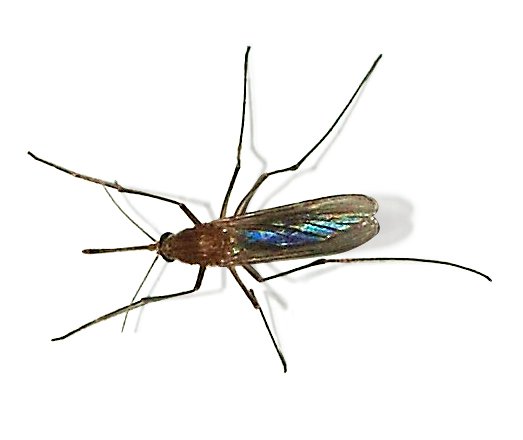
The Gulf Coast has one of the longest and most demanding mosquito seasons in the country. Warm, humid weather runs for most of the year, so biting activity is possible in almost every month. Two things define the region. First, the coastal marshes and low, flood-prone land produce enormous broods of saltmarsh and floodwater mosquitoes that emerge after high tides, heavy rain, and hurricanes. Second, the southern house mosquito (Culex quinquefasciatus) keeps West Nile virus circulating here throughout the year, and the region carries a standing risk of locally acquired dengue. Organized mosquito control districts are stronger and more common here than in most of the country, largely because the mosquito pressure is so high.
Mosquito season here
Plan for a very long season. Along the Gulf Coast, West Nile virus has been documented as active in every season of the year, with peak virus activity in the warm months of June through September and low-level activity continuing through the rest of the year (CDC, Emerging Infectious Diseases, Gulf Coast Texas and Louisiana study). That year-round pattern reflects the climate: mild winters rarely shut mosquitoes down completely.
The southern house mosquito, the main West Nile carrier here, does not enter a true winter dormancy. Instead it becomes relatively inactive during cold spells, resting under buildings and in storm drains and sewers, and then becomes active again during warm periods in the winter months (CDC, Emerging Infectious Diseases). In practice this means the region has a long, dominant warm season with real, if lower, activity even in the coolest weeks. Treat repellent and source reduction as close to year-round habits rather than a summer-only routine.
The mosquitoes you meet
The Gulf Coast hosts several distinct groups, and knowing which one is biting tells you what to expect.
Saltmarsh mosquitoes are the signature Gulf group. The eastern saltmarsh mosquito (Aedes sollicitans) and the black salt marsh mosquito (Aedes taeniorhynchus) lay eggs on moist soil at the upper edges of grassy marshes, where the eggs wait until exceptional high tides or heavy rain flood them and trigger a brood. Larvae can reach adulthood in as little as four to five days after hatching (Rutgers Center for Vector Biology). These are strong, long-distance fliers. A brood of Aedes sollicitans commonly moves several miles inland, so people well away from the coast can be affected (Rutgers Center for Vector Biology). Both are aggressive daytime biters, and Aedes sollicitans is a recognized vector of eastern equine encephalitis, Venezuelan equine encephalitis, and dog heartworm (Rutgers Center for Vector Biology). The black salt marsh mosquito emerges in large numbers after rains and flooding and is responsible for a large share of mosquito insecticide applications in Florida, a good measure of how much control effort these marsh species drive (University of Florida IFAS).
Container mosquitoes are the disease-relevant daytime group in yards and neighborhoods. The yellow fever mosquito (Aedes aegypti) and the Asian tiger mosquito (Aedes albopictus) breed in small artificial containers close to homes and are the mosquitoes that can transmit dengue.
The southern house mosquito (Culex quinquefasciatus) is the region’s key West Nile carrier. It is the principal West Nile vector across the south central states, breeds in polluted standing water, and bites mainly around dusk and after dark.
Floodwater mosquitoes, especially Psorophora species, produce the explosive population surges after major rain and storms. They are aggressive biters, and the large gallinipper (Psorophora ciliata) is a notable nuisance, but these floodwater species generally do not spread viruses to people (CDC hurricane and flood guidance).
For identification details and biology, link to the individual species pages for Aedes sollicitans, Aedes taeniorhynchus, Aedes aegypti, Aedes albopictus, Culex quinquefasciatus, and Psorophora.
Disease risk
West Nile virus is the main established mosquito-borne disease risk on the Gulf Coast. Surveillance in the Texas and Louisiana Gulf Coast has shown the virus active throughout the year, carried mostly by the southern house mosquito, with a summer peak and continued low-level transmission in the off months (CDC, Emerging Infectious Diseases). Most people infected have no symptoms, but a small share develop serious neuroinvasive illness, so the risk is worth taking seriously through the long season.
Local dengue is a smaller but real risk that is concentrated in this climate. In 2024, a record 3,798 dengue cases were reported nationally, and among the continental states the locally acquired cases were reported in Florida (91), California (18), and Texas (1). Florida had the highest dengue incidence in the country that year, roughly four times the national rate (CDC, MMWR, dengue 2024). Florida also documented sustained local transmission earlier, including introduction and spread of dengue virus serotype 3 during 2022 and 2023 (CDC, Emerging Infectious Diseases, dengue virus 3 in Florida). Dengue here is spread by the container-breeding Aedes aegypti and Aedes albopictus, which is why emptying small water-holding containers around the home matters.
Hurricanes and floods drive the region’s most dramatic mosquito events. After a storm, expect an increase in nuisance floodwater mosquitoes in the following weeks. These aggressive biters generally do not spread germs. The mosquitoes that can spread viruses may increase about two weeks after a hurricane, and it can take several more weeks before they could begin transmitting to people (CDC hurricane and flood guidance). So the first post-storm wave is mostly a biting nuisance, while the disease-relevant risk builds later.
For more on these illnesses, link to the West Nile virus and dengue disease pages.
Local control and what to do
The Gulf Coast is home to some of the strongest organized mosquito control programs in the country, including established mosquito control districts that conduct surveillance and both larval and adult control. If you are in the region, find your parish, county, or district program. Many track virus activity and post spraying schedules, and they are the right contact for persistent problems and for reporting heavy activity.
Your own steps still matter, and source reduction is the core of it. At least weekly, empty, scrub, cover, or throw out anything that holds water: buckets, plant saucers, tarps, toys, clogged gutters, and tires. This targets the container species that carry dengue and the house mosquito that carries West Nile. For biting protection, use an EPA-registered repellent, wear long sleeves and long pants when you can, and consider permethrin-treated clothing for time outdoors, which the CDC recommends after storms and during active periods (CDC hurricane and flood guidance).
After a hurricane or flood, expect a surge and prepare for it. Standing floodwater and debris create ideal breeding sites, so drain what you can once it is safe, keep using repellent through the weeks that follow, and watch for local guidance, which may include organized aerial spraying over flooded areas. Because the disease-carrying mosquitoes tend to build later than the first nuisance wave, staying protected for several weeks after a storm is the safer approach.
Sources
- CDC, Emerging Infectious Diseases, “Year-round West Nile Virus Activity, Gulf Coast Region, Texas and Louisiana.” Year-round virus activity, June to September peak with low-level off-season transmission, and Culex quinquefasciatus winter behavior. https://pmc.ncbi.nlm.nih.gov/articles/PMC3320313/ (accessed 20 July 2026).
- Rutgers University, Center for Vector Biology, species profile of Aedes sollicitans (eastern saltmarsh mosquito). Egg-laying on moist marsh soil, flood-triggered broods, four to five day larval development, inland dispersal, daytime biting, and vector role for EEE, VEE, and dog heartworm. https://vectorbio.rutgers.edu/outreach/species/sp7.htm (accessed 20 July 2026).
- University of Florida, IFAS Extension (EDIS EENY591/IN1035), black salt marsh mosquito Aedes taeniorhynchus. Emergence in large numbers after rain and flooding, aggressive biting, and its share of Florida insecticide applications. https://ask.ifas.ufl.edu/publication/IN1035 (accessed 20 July 2026).
- CDC, “What to Do After a Hurricane or Flood” (Mosquitoes). Nuisance floodwater mosquitoes generally do not spread germs, virus-spreading mosquitoes may increase about two weeks after a storm, and protection recommendations including permethrin-treated clothing. https://www.cdc.gov/mosquitoes/response/index.html (accessed via search summary 20 July 2026; page returned HTTP 403 on direct fetch).
- CDC, MMWR, “Increase in Travel-Associated and Locally Acquired Dengue Cases, United States, 2024.” Record 3,798 cases nationally, locally acquired cases in Florida (91), California (18), and Texas (1), and Florida’s highest-in-nation incidence. https://www.cdc.gov/mmwr/volumes/75/wr/mm7518a1.htm (accessed via search summary 20 July 2026).
- CDC, Emerging Infectious Diseases, “Introduction and Spread of Dengue Virus 3, Florida, USA, May 2022 to April 2023.” Sustained local dengue transmission in Florida. https://wwwnc.cdc.gov/eid/article/30/2/23-1615_article (accessed via search summary 20 July 2026).
Related
- [Species: Aedes sollicitans (eastern saltmarsh mosquito)] (placeholder)
- [Species: Aedes taeniorhynchus (black salt marsh mosquito)] (placeholder)
- [Species: Aedes aegypti (yellow fever mosquito)] (placeholder)
- [Species: Aedes albopictus (Asian tiger mosquito)] (placeholder)
- [Species: Culex quinquefasciatus (southern house mosquito)] (placeholder)
- [Species: Psorophora (floodwater mosquitoes)] (placeholder)
- [Disease: West Nile virus] (placeholder)
- [Disease: Dengue] (placeholder)
- [Region: other US regional guides] (placeholder)
Educational note: This page is an independent, non-commercial reference for general education. It is not medical advice. For diagnosis, treatment, or travel guidance, consult a clinician or your state or local health department. For local mosquito problems, contact your parish, county, or mosquito control district.
Last reviewed 20 July 2026.