The short answer
If you want fewer bites and lower disease risk, take extra care from dusk into the night. Many of the mosquitoes that carry disease, including the Culex mosquitoes that spread West Nile virus and the Anopheles mosquitoes that can carry malaria, are most active in the evening and overnight (CDC, Preventing West Nile Virus; CDC Yellow Book, Malaria). Scheduling yard work, exercise, and gatherings away from that window is a reasonable, low-cost way to cut exposure.
Timing alone will not protect you, though. The Aedes mosquitoes that spread dengue, Zika, and chikungunya bite during the day, with peaks in the morning and the late afternoon (CDC, How Dengue Spreads). Because different mosquitoes are active at different hours, there is no time of day that is truly bite-free. Use timing as one layer, then add repellent and clothing when you cannot avoid being out.
Dusk and dawn peak for Culex and Anopheles
Culex mosquitoes are the main carriers of West Nile virus, the most common mosquito-borne disease reported in most of the country. They are most active from around sunset into the night, which is why the CDC advises reducing time outdoors between dusk and dawn during West Nile season (CDC, Preventing West Nile Virus). University guidance is consistent: host-seeking Culex mosquitoes are most active in the early morning and evening hours (UC Statewide IPM Program, Mosquitoes).
Anopheles mosquitoes, the group that can transmit malaria, are largely crepuscular or nocturnal. The CDC states that malaria transmission occurs primarily between dusk and dawn because of the nighttime feeding habits of Anopheles mosquitoes (CDC Yellow Book, Malaria). Locally acquired malaria is rare in the country, with only a small number of cases in recent years, but Anopheles species are present across much of the country, so the same evening-into-night caution applies (CDC, Operational Guidance for Investigating Locally Acquired Malaria).
For more on which species is out at which hour, see the related guide below on day-biting versus night-biting mosquitoes.
Day-biting Aedes
Aedes aegypti and Aedes albopictus break the dusk-and-dawn rule. These are the mosquitoes that spread dengue, Zika, and chikungunya, and they bite during daylight (CDC, How Dengue Spreads). Reported peaks fall in the couple of hours after sunrise and the several hours before sunset, though they will also bite indoors and in shade through the day, and in well-lit areas after dark.
They also live close to people, indoors and out, and breed in very small amounts of standing water. That combination means a plan built only around avoiding dusk does little against them. If Aedes mosquitoes are established in your area, daytime protection matters as much as evening protection.
How to use timing
Treat timing as your first, free layer of protection:
- Plan higher-risk outdoor time (long walks, yard work, kids’ play, dining outside) away from the local peak. In most of the country that means avoiding the dusk-to-night window for the West Nile carriers.
- Remember that mornings and late afternoons are the Aedes window. If dengue, Zika, or chikungunya vectors are active where you live, do not assume daytime is safe.
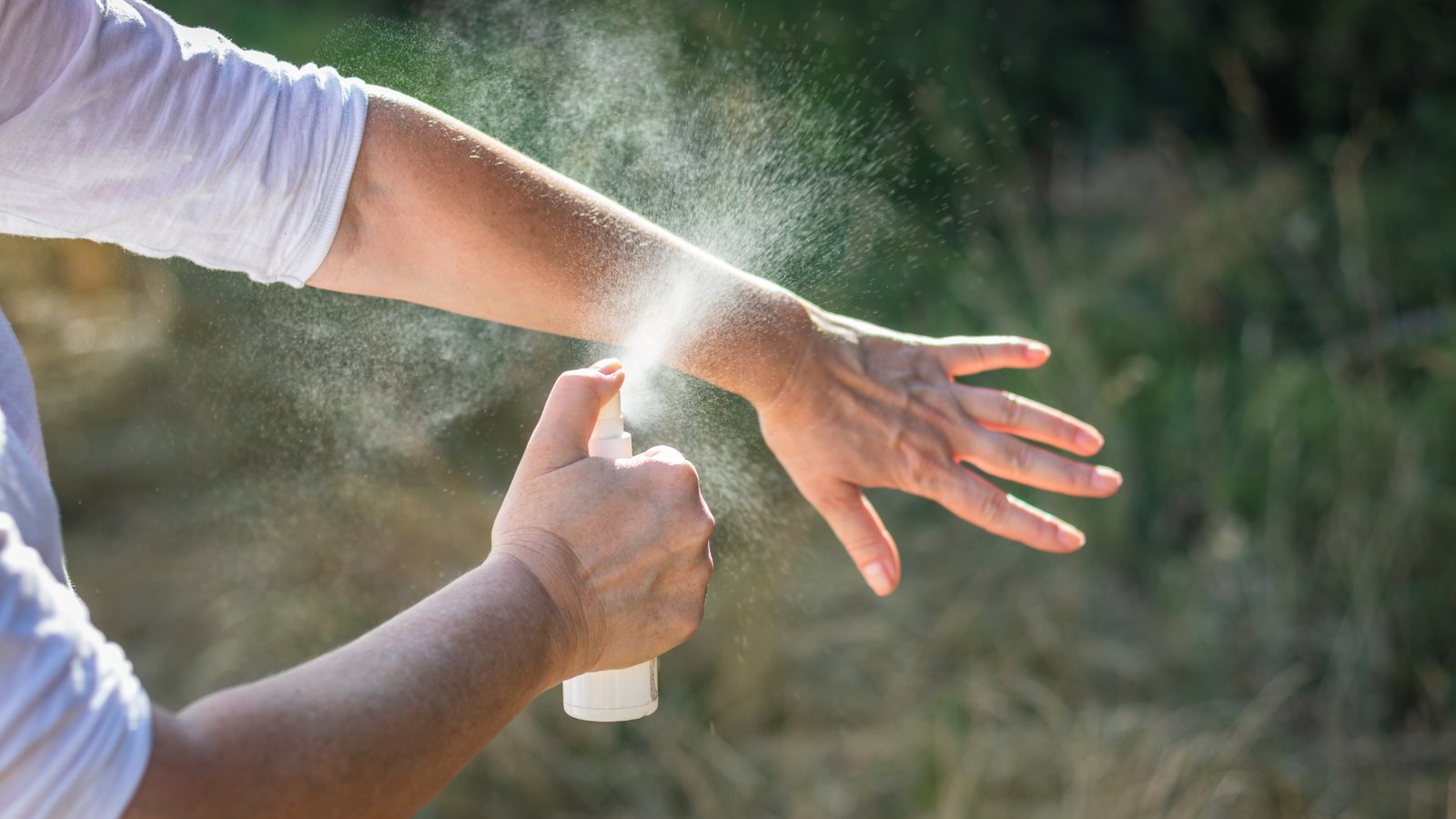
- When you cannot shift the timing, shift the protection. Apply an EPA-registered repellent (products with DEET, picaridin, IR3535, oil of lemon eucalyptus or PMD, or 2-undecanone) and wear long sleeves and long pants (CDC, Preventing Mosquito Bites).
- Check screens on windows and doors, and use air conditioning where you have it, so the hours you spend indoors stay bite-free.
Why timing is only one layer
Timing narrows your exposure, but it cannot close it. Biting hours vary by species and by region, so the “safe” window in one place is a peak in another (UC Statewide IPM Program, Mosquitoes). No single measure does the whole job. Even good control of larvae on your own property may not lower the number of mosquitoes biting you, because adults fly in from elsewhere (UC Statewide IPM Program, Mosquitoes).
The reliable approach is to stack layers: adjust timing where you can, use repellent and clothing when you are out, keep screens in good repair, and remove the standing water where mosquitoes breed. Timing is a useful first move, not a substitute for the rest.
Sources
- CDC, Preventing West Nile Virus (Culex is the main West Nile vector; reduce time outdoors and take precautions during peak biting hours between dusk and dawn). https://www.cdc.gov/west-nile-virus/prevention/index.html (accessed 2026-07-20)
- CDC, How Dengue Spreads (Aedes aegypti and Aedes albopictus spread dengue and are the same mosquitoes that spread Zika and chikungunya; these Aedes mosquitoes bite during the day). https://www.cdc.gov/dengue/transmission/index.html (accessed 2026-07-20)
- CDC, Preventing Mosquito Bites (use EPA-registered repellents containing DEET, picaridin, IR3535, oil of lemon eucalyptus or PMD, or 2-undecanone; wear long sleeves and pants). https://www.cdc.gov/mosquitoes/prevention/index.html (accessed 2026-07-20)
- UC Statewide IPM Program (University of California), Mosquitoes (biting times vary by species and location; reduce time outdoors in early morning and evening when host-seeking Culex are most active; larval control on your property may not eliminate biting; remove standing water). https://ipm.ucanr.edu/home-and-landscape/mosquitoes/ (accessed 2026-07-20)
- CDC Yellow Book (2026), Malaria (malaria transmission occurs primarily between dusk and dawn because of the nocturnal feeding habits of Anopheles mosquitoes). https://www.ncbi.nlm.nih.gov/books/NBK620970/ (accessed 2026-07-20)
- CDC, Operational Guidance for Investigating Locally Acquired Mosquito-Transmitted Malaria, United States, 2026 (MMWR) (locally acquired malaria is rare domestically; Anopheles vectors are present across much of the country). https://www.cdc.gov/mmwr/volumes/75/rr/rr7501a1.htm (accessed 2026-07-20)
Related
- Day-biting versus night-biting mosquitoes: which species is out when [placeholder]
- Choosing and using insect repellent that works [placeholder]
- Removing standing water around your home [placeholder]
- West Nile virus: risk and prevention basics [placeholder]
Educational note: This page is general reference information, not medical advice. For diagnosis, treatment, or travel-specific guidance, consult a healthcare professional or your local health department.
Last reviewed 20 July 2026.